Hair loss affects people differently. For some, it starts as a receding hairline in their twenties. For others, it is gradual thinning across the crown that becomes impossible to ignore after a certain point. What most people have in common is the moment they start actively looking for solutions and that search eventually leads to two main options that come up repeatedly: a hair transplant and scalp micropigmentation.
If you are based in Calicut and trying to understand what scalp micropigmentation actually is, how it compares to a transplant, and whether it might be the right fit for your situation, this guide covers all of that clearly and honestly.
What Is Scalp Micropigmentation?
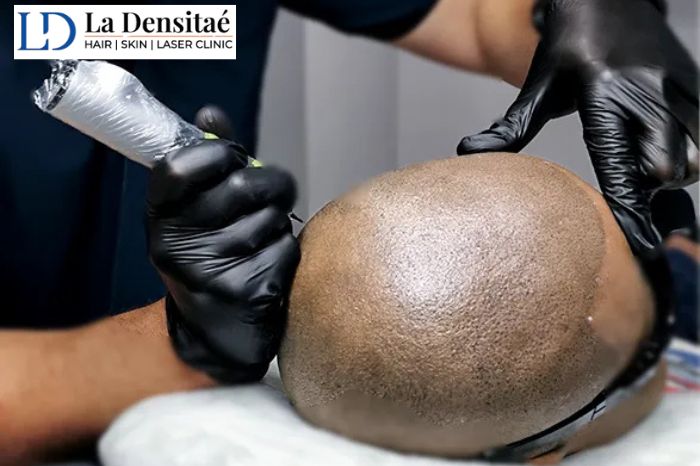
Scalp micropigmentation, commonly referred to as SMP treatment, is a non-surgical cosmetic procedure that uses specialized pigment deposited into the scalp using fine needles. The technique creates the appearance of tiny hair follicles on the scalp surface, mimicking the look of a closely shaved head or adding the impression of density to thinning areas.
It is important to understand from the outset what SMP is and is not. It is a cosmetic procedure essentially a highly specialized form of tattooing designed specifically for the scalp. It does not stimulate hair growth, does not involve moving or implanting follicles, and does not change the underlying hair loss process. What it does is create a visual impression of hair that can be remarkably convincing when done well.
How SMP Is Different From a Hair Transplant
This distinction matters before making any treatment decision.
A hair transplant in Calicut is a surgical procedure that relocates living hair follicles from a donor area to thinning or bald regions. Those transplanted follicles produce real hair that grows, can be styled, and continues to behave like natural hair long term. The result is actual hair growth, not a visual simulation.
Scalp micropigmentation creates the appearance of follicles using pigment. The result looks convincing, particularly for patients who prefer a shaved or very short hairstyle, but no real hair grows from the treated area. The pigment fades over time and typically requires maintenance sessions every few years to retain its appearance.
Both are legitimate options they simply solve different problems and suit different patients.
Who Is a Good Candidate for SMP?
Patients With Insufficient Donor Hair
Not everyone qualifies for a hair transplant. Patients with very limited donor density, meaning the hair at the back and sides of the scalp is too thin to provide enough grafts for meaningful coverage, may not achieve satisfying transplant results. For these patients, SMP treatment offers a way to restore the visual appearance of a fuller scalp without requiring donor follicles.
Patients Who Prefer a Shaved Look
SMP works best when the surrounding natural hair is kept very short, so the pigmented dots blend seamlessly with real stubble. Patients who are comfortable wearing their hair at a close-shaved length tend to get the most natural-looking results from this procedure.
Patients Wanting to Complement a Transplant
Some patients combine both approaches. A hair transplant restores actual hair growth in key areas, while SMP adds the appearance of density in surrounding regions where grafts alone cannot fully cover. This combined approach is increasingly used for patients with advanced hair loss who want the most complete result possible.
Patients Not Ready for Surgery
For someone not yet ready to commit to a surgical procedure, SMP offers a non-invasive alternative that delivers immediate visual results with minimal downtime.
What the SMP Procedure Involves
The process typically takes place across two to three sessions spaced a few weeks apart. A trained practitioner uses a fine needle device to deposit pigment into the upper layer of the scalp in a pattern that replicates natural follicle distribution. Session length depends on the size of the area being treated.
There is minimal discomfort involved for most patients, and recovery is straightforward avoiding sun exposure and keeping the scalp clean for a short period post-session. Redness settles within a day or two for most people.
Finding the Right Clinic in Calicut
Whether you are exploring SMP, a hair transplant in Calicut, or trying to understand which suits your situation better, the consultation process is where everything should become clear.
The best hair transplant in Calicut comes from clinics where surgeons take time to assess individual hair loss patterns, donor area quality, and patient lifestyle before recommending any treatment. Under the clinical direction of Dr Gajanan Jadhao, whose experience spans hair restoration across multiple cities through the Ladensitae network, consultations are approached with this kind of individual focus matching the treatment to the patient rather than the patient to a predetermined package.
A good clinic will also be honest about when SMP is a better fit than a transplant, rather than always steering patients toward surgery regardless of individual circumstances. That kind of transparency is worth looking for when evaluating options at any hair transplant clinic in Calicut.
Understanding Hair Transplant Cost in Calicut Versus SMP
Hair transplant cost in Calicut depends on graft count, technique, and surgeon experience. SMP pricing is typically structured differently, based on the number of sessions needed and the size of the treatment area rather than graft count.
In general, SMP tends to have a lower upfront cost than a hair transplant for comparable coverage areas. However, SMP requires maintenance sessions every few years as pigment fades, while a well-performed hair transplant delivers results that are largely permanent. Over a longer timeframe, the total investment for each option tends to level out more than the initial price difference suggests.
Final Thoughts
Scalp micropigmentation is a genuinely useful hair loss solution for the right patient but it is not a replacement for a hair transplant in cases where real hair growth is the goal. Understanding what each option delivers, and which one suits your specific hair loss pattern and lifestyle, is the most important decision in this whole process.
For Calicut patients exploring both options, a thorough consultation with an experienced specialist will give far more clarity than any amount of online research and will help you arrive at a decision based on your actual situation rather than a general overview.
About the Author