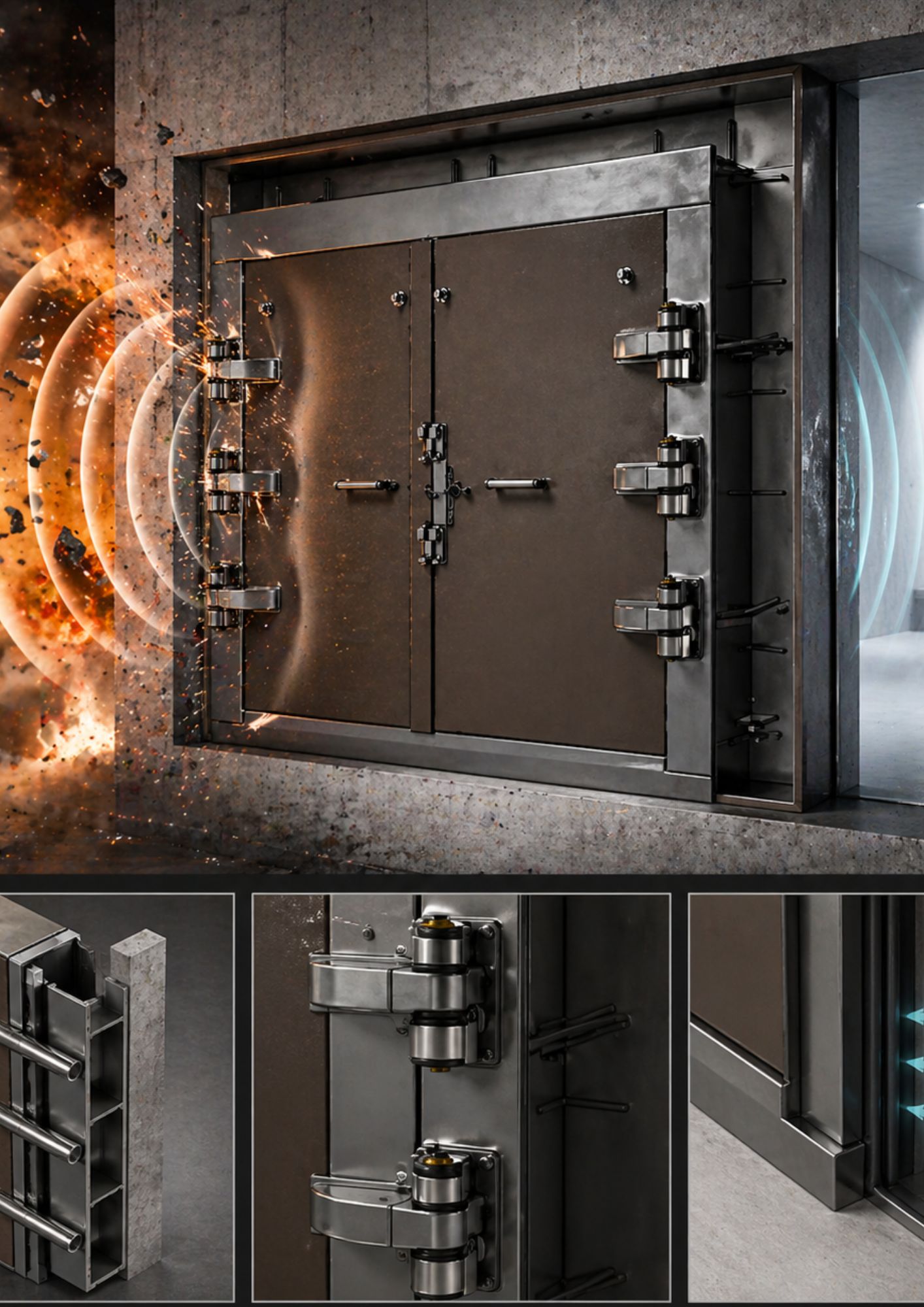
Imagine a control room at a petrochemical plant during routine maintenance. A nearby pipe rupture triggers a deflagration in an adjacent processing bay. Sensors detect the overpressure and structural teams watch for secondary effects — the weakest building elements will determine whether the incident remains local or escalates into catastrophic damage. One critical line of defence in that scenario is the building envelope: specially engineered blast-resistant openings such as a blast window.
In security-sensitive industrial and government facilities, a blast window is a purpose-designed glazed opening that reduces the destructive effects of an explosion while maintaining daylight, visibility, and operational function. Blast windows combine engineered glazing and reinforced frames to absorb and redirect blast energy, protect occupants from fragments, and preserve structural integrity. Understanding blast window design and application is essential for risk-prioritised projects across defence, oil & gas, power generation, and data centres.
What is a blast window system?
A blast window system comprises laminated, often multi-layered glazing and a purpose-built frame that transfers blast loads to the surrounding structure. Unlike standard windows, components are selected and detailed to meet specified blast load criteria (pressure, impulse, and duration), fragment retention performance, and serviceability after an event.
How blast windows work
Blast windows mitigate pressure waves through staged energy absorption: outer layers take the initial impact, inner layers retain fragments, and the frame dissipates loads into supporting structure. Laminated glass, polymer interlayers (e.g., polyvinyl butyral or PVB, ionoplasts), and toughened layers work in combination to control shattering behaviour and maintain a protective barrier.
Blast pressure mitigation principles
Design uses blast-load profiles (peak overpressure, positive phase duration, impulse) derived from threat assessments or standards-based scenarios. Engineers model glazing deflection, strain in interlayers, and frame anchorage capacity to ensure the system manages peak pressure without catastrophic detachment. The goal is to limit window breach, reduce flying debris, and maintain a survivable interior environment.
Structural engineering considerations
Frames and anchors must be specified as part of the structural load path. A compliant design avoids simply replacing glazing without upgrading surrounding mullions or anchors. Connection details, backing structure reinforcement, and dynamic analysis are essential. Integration with curtain walling and wall construction determines retrofit feasibility and cost drivers.
Materials and technologies
Modern blast resistant glass uses laminated assemblies combining annealed, heat-strengthened, or tempered glass with high-performance interlayers. Glass alternatives include polycarbonate laminates for high deflection applications. Frames are normally steel or reinforced aluminium with engineered anchors and pressure-equalisation details to prevent sudden failure. Corrosion protection and thermal breaks improve long-term durability and energy efficiency.
Key features to evaluate
Blast resistance: certified to target blast ratings and standardized test protocols.
Impact resistance: ability to withstand secondary impacts without catastrophic loss.
Fragment retention capability: retains shards and reduces ballistic fragmentation.
Structural reinforcement: engineered frames and anchorage rated for dynamic loads.
Laminated glazing systems: multi-layered to absorb and distribute energy.
Pressure-wave mitigation: controlled deflection and staged failure modes.
Corrosion resistance and durability: for coastal or chemical environments.
Energy efficiency and weather resistance: insulated units and seals for operational comfort.
Low maintenance and long service life: accessible glazing replacement options.
Security performance: combined with ballistic or forced-entry resistance where needed.
Performance during explosions
A well-designed blast window will remain attached to the structure and hold fragments in place long enough for occupants to evacuate or for pressure to decay. Performance metrics include the glazing’s maximum deflection, residual retention, and whether the frame remains anchored. Independent laboratory testing and witnessed field trials provide the strongest performance evidence.
Applications
Blast windows are used where human life, critical equipment, or continuity of operations must be protected:
Military and defence installations
Ammunition depots and ordnance storage buffers
Oil & gas processing and refining units
Petrochemical plants and hazardous processing facilities
Power generation plants and control rooms
Data centres and server halls
Government buildings and embassies
Industrial control rooms and critical infrastructure sites
Cost and investment factors
Price is driven by technical requirements rather than raw materials alone. Key drivers:
Blast rating and required residual performance
Specified glazing thickness, interlayer type, and laminate complexity
Frame complexity and structural reinforcement needs
Manufacturing precision and factory testing
Compliance to standards and certification costs
Installation complexity and site-specific structural work
Long-term maintenance and lifecycle replacement planning
Buyer’s guide: selecting suppliers
When evaluating blast resistant window manufacturers, assess:
Proven industry experience and documented projects
Blast engineering expertise and in-house analysis capability
Manufacturing and quality-control systems
Independent test data and compliance certifications
Ability to supply custom sizes and integrate with structure
Installation support and technical documentation
After-sales maintenance and spare-part availability
References from similar high-security projects
Common mistakes to avoid
Choosing based solely on initial cost without evaluating lifecycle risk
Ignoring detailed blast-load calculations tied to site-specific threats
Selecting glazing without assessing frame and anchor compatibility
Overlooking fragment retention and residual performance criteria
Neglecting compliance and certification needs
Underestimating future upgrades or changes in facility risk profile
Where to look for solutions
For facility owners considering upgrades such as a blast window for home offices within high-risk sites or protective glazing for critical control rooms, consult manufacturers with demonstrated blast engineering capability and verifiable test data. For example, a specialised supplier catalogue and technical references can be found here: Blast window for home.
Conclusion
A blast window is a technical, performance-driven component that provides measured protection against explosive threats while preserving building functionality. Proper selection requires blast-engineering input, integrated frame and structural design, certified materials, and careful lifecycle planning. When specified and installed correctly, blast windows materially reduce risk to people and critical assets — a decisive step toward resilient infrastructure and enduring operational continuity.
About the Author