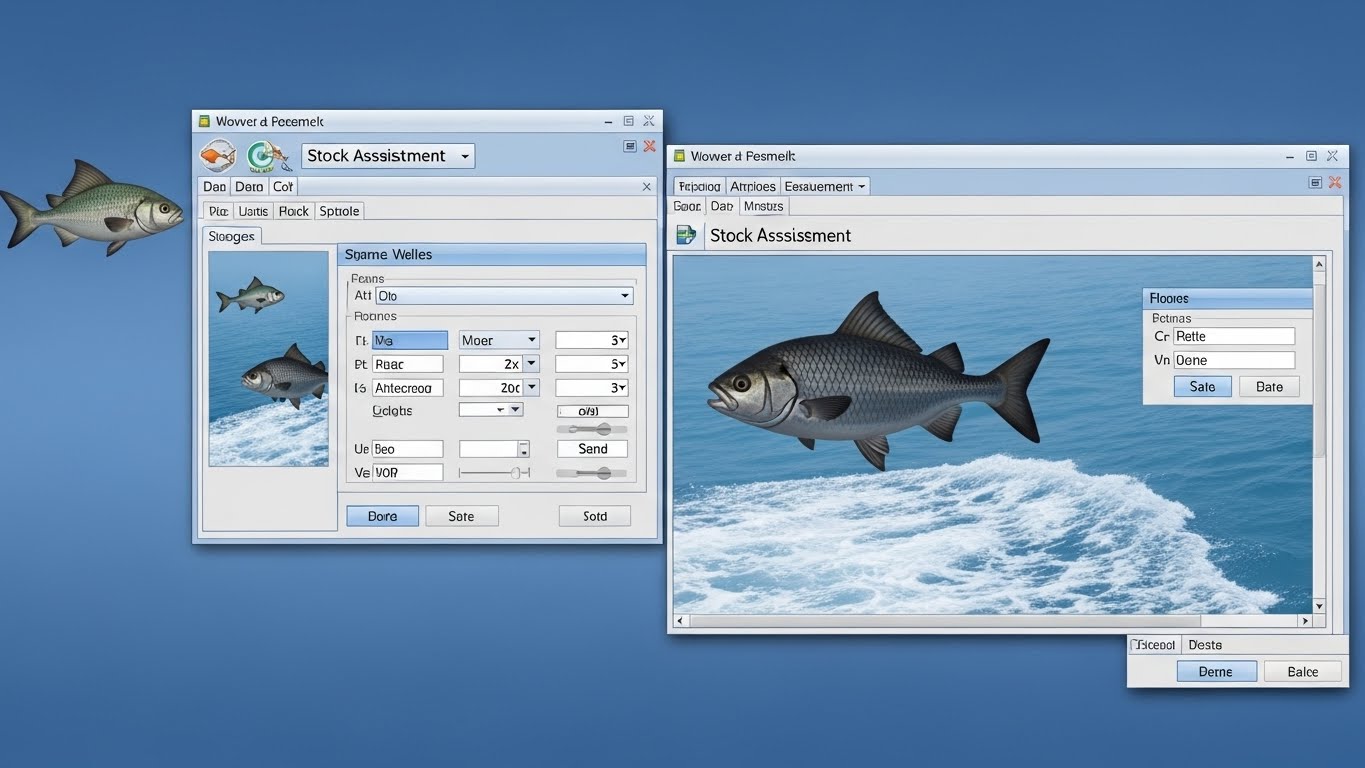
Why Modern Fisheries Depend on Integrated Fisheries Software for Stock Assessment and Data Management
Contemporary fisheries management operates in unprecedented complexity, juggling multiple species, diverse stakeholder interests, intricate regulatory frameworks, and vast quantities of biological, environmental, and harvest data. The days when fisheries scientists could manage programs using paper records, spreadsheets, and manual calculations have vanished, replaced by data-intensive operations requiring sophisticated digital infrastructure. Modern fisheries software has emerged as essential infrastructure enabling effective science-based management by integrating diverse data streams, automating complex analyses, ensuring regulatory compliance, and facilitating stakeholder communication. From multi-million dollar commercial operations to conservation programs protecting endangered species, success increasingly depends on robust information systems that transform raw data into actionable insights guiding sustainable harvest and conservation decisions. Explore comprehensive fisheries software systems designed to streamline operations and enhance decision-making across the entire management spectrum.
The Data Explosion in Modern Fisheries
Fisheries science has evolved from simple catch accounting to comprehensive ecosystem monitoring incorporating biological sampling, tagging studies, environmental monitoring, genetic analysis, economic data, and stakeholder reporting. A single salmon program might generate hundreds of thousands of tag detections annually, tens of thousands of biological samples, continuous environmental sensor readings, daily harvest reports from multiple fisheries, and hatchery production records spanning decades.
Managing this information deluge using disconnected spreadsheets and databases creates chaos. Data fragmentation prevents integrated analyses, transcription between systems introduces errors, different staff members work from inconsistent datasets, and critical information gets lost or overlooked. Fisheries software platforms addressing these challenges through unified data management have transitioned from luxury to necessity for programs seeking efficiency and analytical rigor.
Centralized Data Management and Integration
The fundamental value proposition of integrated platforms lies in centralized data management. Rather than biological data residing in one spreadsheet, tagging records in another database, harvesting statistics in separate files, and environmental data in yet another system, unified platforms consolidate all information into coherent structured databases.
This consolidation delivers immediate benefits. Staff access current complete datasets rather than outdated copies scattered across personal computers. Analyses incorporate all relevant information rather than whatever subset researchers managed to locate and integrate manually. Data entry occurs once rather than redundantly into multiple systems. Updates propagate instantly across the entire organization rather than requiring manual synchronization.
For multi-institution cooperative programs, centralized cloud-based fisheries management software enables seamless collaboration. Participating agencies contribute data to shared platforms, creating unified datasets that would be impractical to maintain through manual coordination. Real-time access ensures all partners work from identical information, preventing confusion and duplication.
Automated Data Validation and Quality Control
Data quality determines analytical reliability. Erroneous records—impossible measurements, transcription mistakes, inconsistent codes—corrupt analyses and potentially lead to incorrect management decisions with serious economic and conservation consequences.
Manual data validation proves tedious and incomplete. Reviewing thousands of records for errors requires enormous effort, yet human reviewers inevitably miss mistakes. Automated validation in sophisticated platforms applies consistent quality control rules detecting anomalies instantly during data entry or import.
These systems flag impossible values—negative lengths, weights exceeding species maximums, dates outside sampling periods. They identify inconsistencies—species codes incompatible with locations, age readings conflicting with size measurements. They enforce referential integrity—ensuring that records reference existing locations, species, and personnel rather than containing invalid codes from typographical errors.
Real-time validation during data entry prevents errors from entering databases, while retrospective validation of legacy data identifies problems requiring correction. Fisheries software implementing comprehensive validation improves data quality dramatically compared to manual approaches, enhancing confidence in subsequent analyses.
Advanced Stock Assessment Capabilities
Stock assessment—estimating population size, productivity, and sustainable harvest levels—requires sophisticated statistical analyses incorporating diverse data sources. Traditional approaches involved manual data compilation, export to specialized statistical software, analysis, and interpretation—workflows consuming weeks or months.
Integrated platforms incorporating stock assessment modules streamline this process dramatically. Data flows directly from operational databases into assessment models without manual compilation. Standardized analytical procedures apply consistent methods across years and populations, preventing methodological inconsistencies. Automated report generation produces standardized outputs documenting assessment results.
Modern fisheries management software often implements commonly used assessment models directly—surplus production models, age-structured models, mark-recapture analyses. Researchers configure models through intuitive interfaces rather than programming, run analyses with single commands, and obtain comprehensive output including population estimates, uncertainty measures, and harvest recommendations.
Mark-Recapture Analysis Integration
Tagging programs generate massive datasets documenting when and where individually marked fish were tagged and subsequently detected or recovered. Extracting meaningful information—survival rates, movement patterns, exploitation rates—requires specialized statistical methods accounting for imperfect detection and temporal variation.
Mark-recapture analysis demands careful data management ensuring complete capture histories for every tagged individual. Fisheries software designed for tagging programs automatically constructs these histories from raw detection records, applying appropriate analytical models, and generating survival estimates, movement matrices, and exploitation rate calculations.
Integration between tagging databases and analytical modules eliminates manual data formatting—traditionally the most time-consuming and error-prone aspect of mark-recapture analysis. Automated workflows generate updated population estimates as new data arrives, enabling real-time monitoring of population trends rather than annual retrospective assessments.
Hatchery Operations and Production Tracking
Salmon enhancement programs operate complex hatchery systems involving multiple facilities, diverse broodstock sources, coded-wire tagging of millions of juveniles, and multi-year tracking of returns. Managing this complexity without specialized software proves nearly impossible at scale.
Hatchery modules in comprehensive platforms track broodstock collection documenting parentage, spawning operations recording family groups, egg incubation monitoring development, rearing managing feeding and growth, marking programs applying identification codes to release groups, and adult return processing identifying hatchery-origin fish in natural and harvest systems.
This cradle-to-grave tracking enables critical analyses. Managers evaluate which broodstock contribute most successfully to returns, optimizing genetic management. They assess whether hatchery fish survive as well as wild fish, evaluating program effectiveness. They calculate cost-per-return metrics informing budget allocations. These analyses require comprehensive integrated data that fisheries software manages efficiently.
Harvest Monitoring and Quota Management
Commercial and recreational fisheries require real-time harvest monitoring ensuring quotas aren’t exceeded while maximizing fishing opportunity. Traditional paper-based reporting systems introduced delays preventing responsive management, often resulting in quota overages or premature fishery closures from overly conservative management.
Electronic reporting systems integrated with management platforms enable near-real-time harvest tracking. Commercial fish buyers report purchases electronically, recreational charter operators submit catch logs digitally, and processing plants transmit production data—information flowing automatically into central systems without manual data entry.
Automated quota tracking compares cumulative harvests against established limits, generating alerts as fisheries approach quotas. Managers can implement responsive actions—season extensions when harvest rates run below predictions, early closures when catch rates exceed expectations—maintaining sustainable harvest levels while optimizing economic and recreational benefits.
Environmental Data Integration and Habitat Monitoring
Fish populations respond to environmental conditions—water temperature, flow, ocean productivity, habitat quality. Understanding these relationships requires integrating biological data with environmental monitoring across temporal and spatial scales.
Modern fisheries management software incorporates environmental data management alongside biological information. Water quality monitoring data, stream flow measurements, temperature logger readings, oceanographic observations, and satellite-derived environmental indices all integrate with fish abundance, growth, and survival data.
This integration enables sophisticated analyses revealing environmental drivers of population dynamics. Researchers can correlate juvenile survival with spring water temperatures, adult migration timing with flow conditions, or marine growth with ocean productivity indices. These insights inform predictions of how populations will respond to environmental changes and identify management actions addressing limiting factors.
Genetic Data Management and Population Structure
DNA analysis has revolutionized fisheries science, enabling population identification, parentage determination, and evolutionary investigations. However, genetic data—sequence information, microsatellite genotypes, SNP arrays—requires specialized management distinct from traditional biological data.
Integrated platforms with genetic data modules manage sample tracking from collection through analysis, store genotypic data in appropriate formats, link genetic information with associated biological data, and facilitate analyses requiring genetic and non-genetic information integration.
Stock identification using genetic markers, for example, requires assigning harvested fish to source populations. This analysis combines genetic profiles with harvest location, date, and biological characteristics—integration that fisheries software handles seamlessly but would require extensive custom programming using separate genetic and fisheries databases.
Regulatory Compliance and Reporting
Fisheries programs operate under complex regulatory frameworks requiring extensive documentation and reporting. Federal agencies demand specific data formats and reporting schedules. State regulations impose additional requirements. International treaties require standardized data submission for shared stocks.
Manual compliance proves burdensome, requiring staff to extract data from operational databases, reformat to meet regulatory specifications, generate required reports, and submit by deadlines. Automated reporting modules eliminate much of this burden by implementing regulatory reporting requirements directly in management systems.
fisheries management software configured with regulatory templates generates compliant reports automatically, extracting required data, applying necessary calculations, formatting outputs appropriately, and even submitting electronically when systems interface with regulatory agency databases. This automation ensures timely compliance while freeing staff for higher-value activities than report formatting.
Stakeholder Communication and Transparency
Modern fisheries management emphasizes transparency and stakeholder engagement. Fishing communities, conservation organizations, tribal nations, and the general public expect access to information about stock status, management decisions, and harvest opportunities.
Web-based portals integrated with management systems provide public data access without compromising security or overwhelming staff with information requests. Current harvest statistics, stock assessment results, seasonal regulations, and real-time fishery status all become available through user-friendly interfaces.
This transparency builds trust and enables informed participation in management processes. When stakeholders access the same data managers use, discussions focus on interpreting information and evaluating management options rather than disputing data validity. Fisheries software facilitating this transparency strengthens the social foundation of sustainable management.
Economic Analysis and Cost-Benefit Evaluation
Fisheries generate substantial economic value while requiring significant management investments. Understanding economic returns from different management strategies, evaluating cost-effectiveness of enhancement programs, and optimizing resource allocations all require economic data integration with biological information.
Modern platforms incorporate economic modules tracking costs—hatchery operations, enforcement, research, habitat restoration—alongside benefits—commercial harvest value, recreational fishing expenditures, ecosystem services. Integrated economic analysis reveals which programs deliver greatest returns on investment, informing strategic planning and budget prioritization.
Mobile Applications for Field Operations
Field biologists, technicians, and enforcement personnel traditionally recorded data on paper forms requiring later transcription—slow processes introducing errors and preventing real-time data access. Mobile applications connected to central fisheries management software systems eliminate these limitations through direct digital data capture.
Staff use tablets or smartphones to record biological samples, document enforcement actions, conduct creel surveys, or inspect hatchery operations, with data flowing immediately into central databases. GPS integration automatically georeferences observations, photo documentation attaches directly to records, and offline capability ensures functionality in areas lacking connectivity.
Adaptive Management and Decision Support
Fisheries management increasingly employs adaptive approaches that adjust actions based on monitoring results, learning from experience to improve outcomes progressively. Implementing adaptive management effectively requires systematic documentation of management actions, comprehensive monitoring of responses, and formal evaluation of outcomes—workflows that fisheries software facilitates through structured data management and analytical capabilities.
Decision support systems built into advanced platforms use historical data and ecological models to project consequences of alternative management actions. Managers can explore scenarios—different harvest rates, varying escapement goals, altered hatchery production levels—evaluating predicted outcomes before implementation. This prospective analysis improves decision quality and builds stakeholder confidence through transparent, data-driven processes.
Collaboration Across Jurisdictions
Many fish populations span multiple management jurisdictions—federal, state, tribal, and international authorities all sharing responsibility. Effective management requires coordination and data sharing among these entities, traditionally hampered by incompatible data systems and information silos.
Cloud-based fisheries management software with configurable access controls enables multi-jurisdictional collaboration while respecting sovereignty and data ownership concerns. Participating agencies contribute data, access shared information appropriate to their roles, and coordinate management actions based on unified datasets. This cooperation has proven essential for managing migratory species crossing multiple jurisdictions.
Training and Institutional Knowledge
Fisheries programs accumulate institutional knowledge over decades—understanding of historical patterns, awareness of data quirks, expertise in analytical methods. This knowledge traditionally resided in experienced staff members’ memories, creating vulnerability when personnel retired or changed positions.
Well-designed platforms incorporate institutional knowledge through structured data dictionaries, standardized analytical procedures, comprehensive documentation, and guided workflows that encode best practices. New staff learn correct procedures through software that enforces standards rather than relying entirely on mentorship from experienced colleagues. This knowledge preservation strengthens organizational resilience.
Cost Considerations and Return on Investment
Implementing comprehensive fisheries management software requires substantial investment—licensing fees, implementation costs, training, and ongoing support. However, benefits typically justify costs through operational efficiency, improved decision-making, reduced errors, and enhanced analytical capabilities.
Studies evaluating fisheries management information systems document returns exceeding initial investments within 3-5 years through reduced staff time on data management, fewer errors requiring correction, improved harvest management optimizing economic returns, and enhanced conservation effectiveness preventing costly population declines. These tangible benefits motivate increasing adoption despite upfront costs.
Future Directions and Emerging Technologies
Artificial intelligence and machine learning integration promises to enhance analytical capabilities dramatically. Automated pattern recognition in large datasets, predictive models forecasting population responses to environmental changes, and optimization algorithms identifying management strategies maximizing multiple objectives will augment human decision-making.
Integration with Internet-of-Things sensors—environmental monitors, acoustic tags, automated counters—will provide unprecedented data streams enabling near-real-time ecosystem monitoring. Cloud computing will enable complex analyses previously requiring high-performance computing resources, democratizing access to sophisticated methods.
Conclusion
Modern fisheries management confronts complexity that overwhelms traditional data management approaches. The volume, diversity, and analytical sophistication required demand integrated digital infrastructure unifying data management, analytical capabilities, regulatory compliance, and stakeholder communication. Fisheries software platforms addressing these needs have become essential tools enabling effective science-based management of aquatic resources. Through centralized data management, automated quality control, integrated analytics, real-time monitoring, and collaborative capabilities, these systems transform raw information into actionable insights supporting sustainable harvest and conservation. As fisheries face mounting pressures from climate change, habitat degradation, and increasing demand, robust information systems providing comprehensive situation awareness and analytical support become not merely advantageous but essential infrastructure for responsible stewardship of aquatic resources that billions of people depend upon for food, livelihoods, and cultural identity.
About the Author