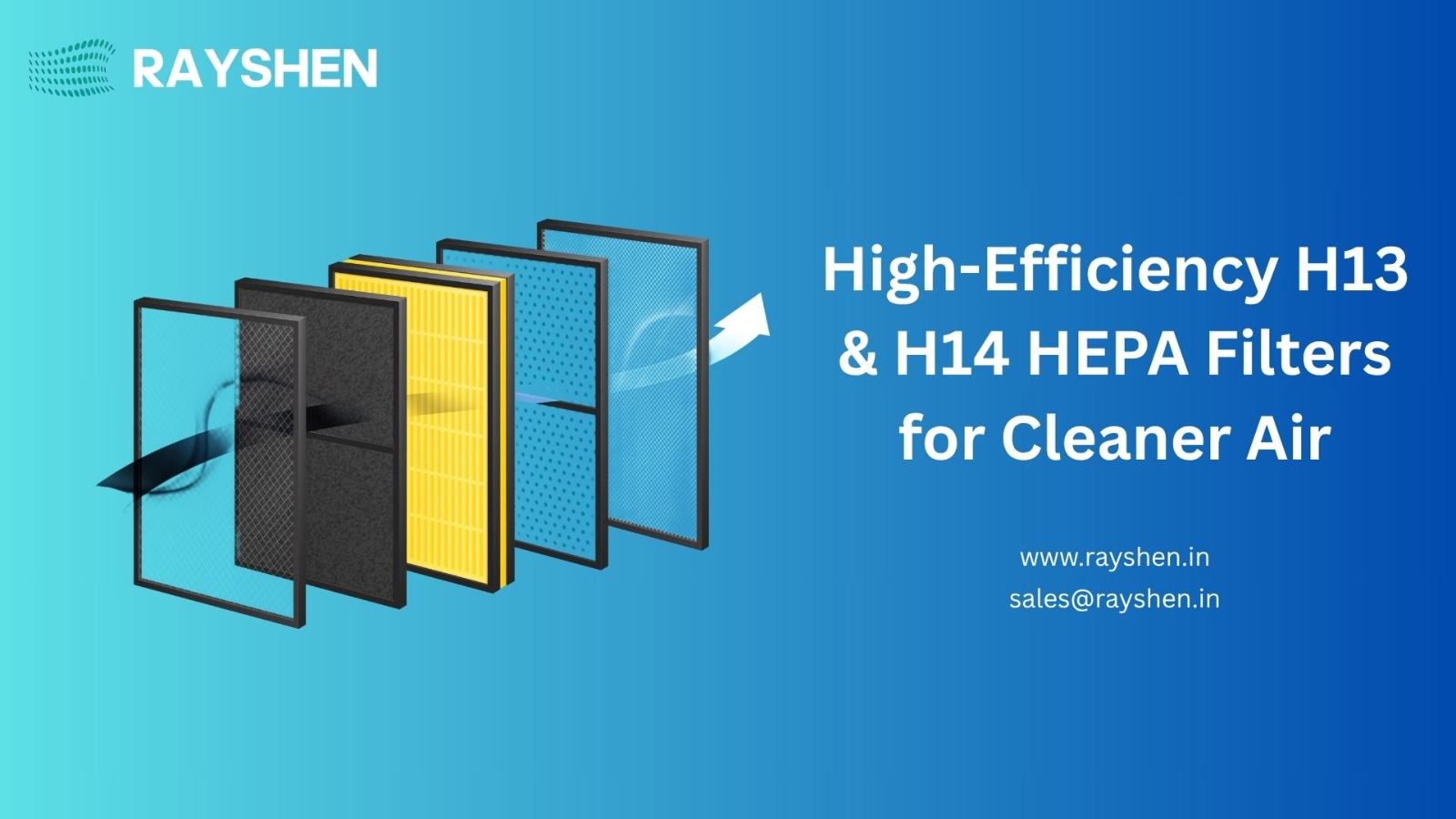
Clean room environments are designed to maintain extremely low levels of airborne contamination. Industries such as pharmaceuticals, biotechnology, electronics, food processing, and healthcare rely on clean rooms to ensure product quality, safety, and regulatory compliance. At the heart of every effective clean room lies one critical component—the HEPA filter. Without reliable air filtration, maintaining controlled conditions would be nearly impossible.
Understanding the Role of HEPA Filters in Clean Rooms
A HEPA (High-Efficiency Particulate Air) filter is engineered to capture at least 99.97% of airborne particles as small as 0.3 microns. These include dust, bacteria, allergens, and microscopic contaminants that can compromise clean room operations. In clean rooms, where even a single particle can affect sensitive processes, HEPA filtration becomes essential rather than optional.
At Rayshen, our advanced hepa filter solutions are specifically designed to meet the strict demands of controlled environments, delivering consistent air purity and dependable performance.
Why Air Quality Is Critical in Clean Room Operations
Clean rooms operate under defined ISO standards that regulate particle concentration, airflow, humidity, and pressure. Poor air quality can lead to:
Product contamination
Equipment malfunction
Regulatory non-compliance
Increased operational costs
A high-quality hepa filtration system ensures that airborne contaminants are continuously removed, maintaining the integrity of the clean room and protecting both products and personnel.
HEPA Filters and Controlled Airflow Management
Clean room efficiency depends not only on filtration but also on how air moves within the space. HEPA filters are integrated into ceiling systems, walls, or terminal housings to create unidirectional airflow. This controlled airflow pushes contaminants away from critical areas and out of the environment.
Rayshen’s hepa solutions are designed to work seamlessly with modern airflow systems, ensuring uniform air distribution and minimal turbulence within clean rooms.
Integration with Fan Filter Units (FFU)
One of the most common applications of HEPA filters in clean rooms is within a fan filter unit. A fan filter unit combines a high-efficiency fan with a hepa filter to deliver clean air directly into the clean room space.
Using a fan filter unit offers several advantages:
Individual airflow control
Energy-efficient operation
Easy installation and maintenance
Scalability for different clean room sizes
Rayshen’s FFU systems are built with precision-engineered hepa filters that provide consistent filtration while maintaining optimal airflow performance.
Enhancing Clean Room Entry with Air Showers
Contamination often enters clean rooms through personnel movement. This is where an air shower plays a vital role. Air showers use high-velocity air, filtered through HEPA systems, to remove dust and particles from clothing and exposed surfaces before entry.
When paired with a reliable hepa filtration system, air showers significantly reduce the risk of external contaminants entering the clean room. Rayshen’s clean room solutions integrate air showers with efficient hepa technology to ensure maximum protection at entry points.
HEPA Filters Support Compliance and Industry Standards
Clean room industries are governed by strict regulatory requirements, including ISO classifications and GMP guidelines. HEPA filters are essential for meeting these standards because they ensure particle counts remain within permissible limits.
Rayshen’s hepa filter products are manufactured and tested to meet international clean room standards, helping businesses maintain compliance while improving operational confidence.
Energy Efficiency and Long-Term Cost Benefits
Modern hepa filtration systems are not just about air purity—they also contribute to energy efficiency. High-quality filters reduce airflow resistance, allowing fans and FFU systems to operate more efficiently. This results in lower energy consumption and reduced operating costs over time.
By choosing Rayshen’s advanced hepa filter solutions, clean room operators benefit from long service life, reduced maintenance needs, and consistent filtration performance.
Reliability and Maintenance in Clean Room Environments
Regular maintenance is crucial for clean room performance. HEPA filters must maintain integrity over time without leaks or efficiency loss. Poor-quality filters can degrade quickly, leading to contamination risks and unexpected downtime.
Rayshen focuses on durability and reliability, offering hepa filtration systems that are easy to inspect, replace, and maintain, ensuring uninterrupted clean room operations.
Why Choose Rayshen HEPA Filters for Clean Rooms
Rayshen is committed to delivering high-performance clean room solutions tailored to industry needs. Our hepa filter systems are designed to integrate seamlessly with fan filter units, air showers, and complete clean room setups.
With a focus on quality, compliance, and efficiency, Rayshen helps businesses maintain contamination-free environments while supporting long-term operational success.
Conclusion
HEPA filters are the backbone of clean room environments. From controlling airborne contamination to supporting airflow systems like FFU and air showers, they play a vital role in maintaining clean room integrity. Investing in reliable hepa filtration is not just a technical decision—it is a strategic one.
With Rayshen’s trusted hepa filter solutions, clean room facilities can achieve superior air quality, regulatory compliance, and long-lasting performance, ensuring safe and efficient operations in even the most demanding environments.
About the Author