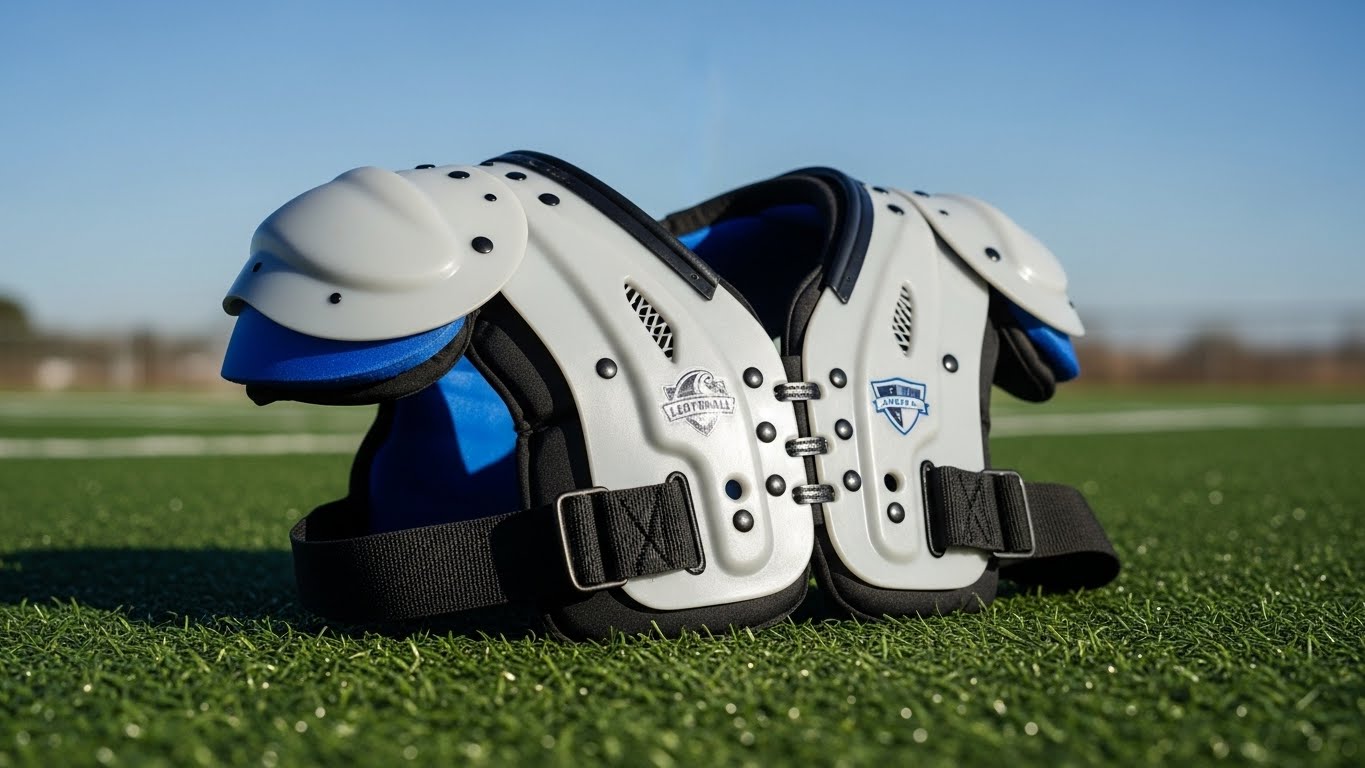
The evolution of football protective equipment represents one of the most impressive applications of material science in sports engineering. Nowhere is this more evident than in the transformation of youth football shoulder pads, which have progressed from simple leather and felt constructions to sophisticated systems incorporating advanced polymers, multi-density foams, and composite materials. Understanding the material science underlying these modern designs reveals how today’s equipment provides superior protection while weighing significantly less than previous generations, fundamentally changing youth football safety standards.
The Foundation: Advanced Polymer Shell Systems
The outer shell serves as the first line of defense against impacts, and material selection for this critical component has evolved dramatically. Traditional shoulder pads utilized basic injection-molded plastics like polyethylene that provided adequate impact resistance but suffered from brittleness, especially in cold weather conditions common during football season.
Modern youth football shoulder pads employ high-performance thermoplastics and composite materials engineered specifically for impact absorption and energy distribution. Polycarbonate blends offer exceptional impact resistance with improved flexibility that prevents cracking under stress. These materials maintain structural integrity across temperature ranges from freezing conditions to summer heat, ensuring consistent protection regardless of environmental factors.
Some premium designs incorporate carbon fiber reinforcement or fiberglass composites that provide remarkable strength-to-weight ratios. These advanced materials allow manufacturers to reduce shell thickness and overall pad weight while maintaining or improving protective capabilities. A carbon-reinforced shell can be 40% lighter than traditional plastic while offering superior impact resistance—a breakthrough that has revolutionized equipment design for youth athletes.
The molecular structure of these advanced polymers contributes significantly to their performance characteristics. Long-chain polymer molecules create material flexibility that allows controlled deformation during impact rather than catastrophic failure. This engineered deformation absorbs kinetic energy that would otherwise transfer to the athlete’s body, reducing peak impact forces that cause injury.
Multi-Density Foam Technology
Perhaps the most significant material science advancement in youth football shoulder pads involves foam padding systems. Traditional equipment relied on single-density polyurethane foam that provided uniform cushioning but lacked the sophisticated response characteristics modern designs achieve through multi-layer systems.
Contemporary padding utilizes multiple foam densities strategically layered to create progressive absorption profiles. The outermost layer typically features lower-density foam (20-30 kg/m³) that compresses easily, absorbing initial impact energy and providing comfort during normal wear. Middle layers employ medium-density foams (40-60 kg/m³) that engage during moderate impacts, while inner layers use high-density materials (70-90 kg/m³) that provide firm support preventing bottoming out during severe collisions.
This graduated density approach optimizes energy absorption across the full spectrum of impacts youth players experience—from incidental contact during practice to high-energy collisions during games. The system ensures that minor impacts are cushioned comfortably while major impacts receive maximum energy absorption, something single-density foams cannot accomplish.
Advanced foam formulations also incorporate open-cell structures that promote ventilation, addressing the heat management challenges traditional closed-cell foams created. These breathable foams allow air circulation that helps regulate body temperature—a critical safety consideration for youth athletes with developing thermoregulatory systems. Some manufacturers use foam formulations with antimicrobial additives that inhibit bacterial growth and reduce odor, enhancing hygiene for equipment that’s worn in close contact with skin during intense physical activity.
Energy-Absorbing Polymer Systems
Beyond traditional foam padding, cutting-edge youth football shoulder pads incorporate specialized energy-absorbing polymers that represent the frontier of protective material science. These materials include d3o, Poron XRD, and similar rate-dependent polymers that remain flexible during normal movement but instantaneously stiffen upon rapid impact.
The molecular mechanism underlying these “smart materials” involves polymer chains that flow freely under slow deformation but lock together when subjected to high-velocity impacts. This dual-state behavior provides exceptional comfort and mobility during routine activity while delivering superior protection during collisions—exactly the performance profile youth football equipment demands.
Laboratory testing demonstrates that shoulder pads incorporating these advanced polymers reduce peak impact forces by 25-35% compared to traditional foam-only designs while adding minimal weight. For youth athletes whose developing bodies are more vulnerable to injury than mature adults, this enhanced protection represents a meaningful safety improvement.
Moisture Management Fabric Systems
The fabric components have evolved as dramatically as hard-shell and foam elements. Traditional equipment used basic nylon or polyester fabrics that trapped moisture, heat, and bacteria—creating comfort and hygiene problems that plagued players and equipment managers alike.
Modern youth football shoulder pads employ technical fabrics engineered specifically for athletic performance. Moisture-wicking materials use capillary action to pull sweat away from skin, transporting it to the fabric surface where it evaporates rapidly. These fabrics typically feature polyester microfibers with hydrophobic treatments that repel water while allowing vapor transmission, keeping young athletes drier and more comfortable.
Four-way stretch fabrics accommodate the full range of athletic movement without restricting motion or creating binding. The elastic recovery properties of modern technical fabrics ensure that shoulder pads maintain proper positioning throughout practices and games despite the dynamic movements football demands. Spandex or elastane blends provide stretch characteristics while maintaining durability through repeated washing and wear cycles.
Antimicrobial treatments applied to fabrics prevent the growth of odor-causing bacteria and fungi. Silver ion technology, copper-infused fibers, and chemical antimicrobial finishes all find application in high-quality shoulder pad fabric systems. These treatments are particularly important for youth equipment that may not receive professional-level laundering between uses.
Attachment and Retention Systems
The materials used in attachment systems—straps, buckles, and fasteners—significantly impact effectiveness and longevity. Traditional elastic straps deteriorated rapidly, losing tension and allowing pads to shift out of proper position. Metal hardware corroded, broke, or caused discomfort against skin.
Contemporary youth football shoulder pads utilize engineered elastic materials with superior durability and consistent tension characteristics over extended use periods. Thermoplastic elastomers maintain their elastic properties through hundreds of stretching cycles without permanent deformation. These materials resist UV degradation, temperature extremes, and chemical exposure from sweat and laundry detergents.
Buckle and fastener systems now employ high-strength nylon composites or acetyl resins that provide exceptional durability without the weight and corrosion issues metal hardware presented. Quick-release mechanisms fabricated from these materials allow easy donning and removal while maintaining secure retention during play. Some advanced systems use hook-and-loop closures with industrial-strength adhesives that maintain holding power through repeated attachment cycles.
Composite Integration and Structural Engineering
Modern designs represent integrated systems where multiple materials work synergistically rather than simply layered components. Advanced manufacturing techniques allow complex geometries and material combinations impossible with traditional construction methods.
Injection molding processes can create shells with variable thickness—reinforced in high-stress areas and reduced where weight savings are possible without compromising protection. Co-molding techniques bond different materials in a single manufacturing step, creating hybrid structures that leverage each material’s optimal characteristics.
Some premium youth football shoulder pads utilize sandwich construction techniques borrowed from aerospace engineering, where thin but strong outer layers encase lightweight core materials. These structures provide exceptional rigidity and impact resistance with minimal weight—critical attributes for equipment worn by developing athletes who benefit from reduced equipment burden.
Thermal Management Materials
Heat management represents a crucial but often overlooked aspect of football equipment safety, particularly for youth athletes. Material science addresses this challenge through specialized thermal management technologies integrated into modern shoulder pad designs.
Phase-change materials (PCMs) embedded in padding or fabric layers absorb heat as body temperature rises, helping regulate athlete core temperature. These materials undergo endothermic phase transitions that consume thermal energy, creating cooling effects during intense activity. While still emerging in football equipment applications, PCMs demonstrate significant potential for enhancing youth athlete safety in hot weather conditions.
Ventilation channels molded into foam padding create air circulation pathways that promote heat dissipation. The geometry and material properties of these channels—typically utilizing more rigid foams that maintain open passages under compression—significantly impact thermal performance. Computational fluid dynamics modeling helps engineers optimize channel design for maximum cooling efficiency without compromising protective capabilities.
Durability and Lifecycle Performance
Material selection must balance performance characteristics with durability requirements. Equipment subjected to repeated impacts, abrasion, moisture exposure, and cleaning cycles must maintain protective capabilities throughout multiple seasons of use.
Modern youth football shoulder pads achieve impressive durability through molecular engineering and protective coatings. UV stabilizers prevent degradation from sunlight exposure during outdoor practices and games. Hydrolysis-resistant polymers maintain properties despite moisture exposure. Abrasion-resistant coatings protect high-wear areas from friction damage.
Accelerated aging tests simulate years of use in compressed timeframes, allowing manufacturers to validate that equipment maintains protective performance throughout its intended lifecycle. Standards organizations like NOCSAE require that certified equipment meet performance specifications not just when new but after simulated aging that represents typical use patterns.
Environmental Considerations and Sustainability
Increasing attention to environmental sustainability influences material selection. Manufacturers explore bio-based polymers derived from renewable feedstocks as alternatives to petroleum-based plastics. Recycled materials—particularly recycled polyester fabrics and post-consumer plastic resins—appear in more equipment lines as technologies for processing recycled materials improve.
Design-for-disassembly principles allow easier separation of materials at end-of-life, facilitating recycling rather than landfill disposal. Modular construction where foam inserts can be replaced without discarding entire pads extends equipment lifespan and reduces waste. These sustainability considerations align with broader societal values while potentially reducing long-term costs for youth football programs.
Testing and Certification Standards
Material performance in youth football shoulder pads is validated through rigorous testing protocols established by NOCSAE and other standards organizations. Impact testing uses drop towers and pneumatic rams to simulate game collisions, measuring how effectively materials absorb energy and limit forces transmitted to instrumented test forms representing youth anatomy.
Materials must demonstrate consistent performance across temperature ranges, after moisture conditioning, and following accelerated aging protocols. These comprehensive testing requirements ensure that the advanced materials deliver reliable protection under real-world conditions rather than just laboratory ideals.
The Future of Material Innovation
Material science research continues pushing boundaries of what’s possible in protective equipment. Graphene-enhanced polymers promise even greater strength-to-weight ratios. Auxetic materials with negative Poisson’s ratios become thicker when stretched, potentially offering novel protective characteristics. Self-healing polymers that repair minor damage could extend equipment lifespan dramatically.
Nanotechnology applications may yield materials with precisely engineered properties at molecular scales. Smart materials incorporating sensors could provide real-time impact monitoring, alerting coaches and medical staff to hits exceeding concerning thresholds. These emerging technologies will further transform youth football shoulder pads in coming years.
Conclusion
The sophisticated material science underlying modern youth football shoulder pads represents a remarkable fusion of chemistry, physics, and engineering dedicated to protecting young athletes. From advanced polymer shells and multi-density foams to moisture-wicking fabrics and energy-absorbing smart materials, every component reflects decades of research and innovation focused on maximizing protection while minimizing weight and enhancing comfort.
Understanding these material technologies provides insight into why contemporary equipment outperforms traditional designs across every relevant metric—impact protection, durability, comfort, and thermal management. As material science continues advancing, protective equipment will only become more effective at its essential mission of keeping young athletes safe while allowing them to develop skills and enjoy competitive football. The materials revolution in football equipment isn’t finished—it’s accelerating, promising even better protection for future generations of youth players.
About the Author