Introduction
In modern industrial environments—particularly within the turbine industry—control systems must ensure precision, reliability, and operational safety. One of the key components enabling this functionality is the GE simplex terminal board. Developed by General Electric, these boards provide a critical interface between field devices and the control system, enabling efficient signal transmission and system coordination.
What Are GE Simplex Terminal Boards?
GE simplex terminal boards are interface modules designed to connect field wiring to a control system using a single-channel (simplex) configuration. Unlike redundant systems that use multiple pathways for fault tolerance, simplex systems rely on one signal path, offering a balance between simplicity, cost-effectiveness, and operational efficiency.
These boards serve as connection hubs for various field devices, including sensors, actuators, and relays. By organizing and routing electrical signals, they ensure that data from the field is accurately transmitted to the control processor, where it can be analyzed and acted upon.
Role in Turbine Control Systems
In gas and steam turbine operations, control systems continuously monitor parameters such as temperature, pressure, speed, and vibration. Terminal boards play a crucial role by acting as the physical interface between these field instruments and the control system.
Their integration allows operators and engineers to:
Maintain consistent and accurate signal flow
Ensure structured and organized wiring systems
Simplify maintenance and fault detection
Support stable and efficient turbine performance
Without reliable terminal boards, communication between field devices and control logic would be inefficient and prone to errors, potentially impacting turbine safety and productivity.
Relay Terminal Boards in Turbine Applications
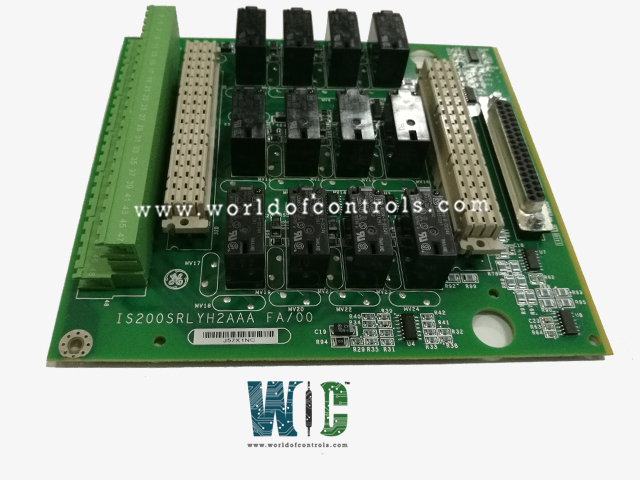
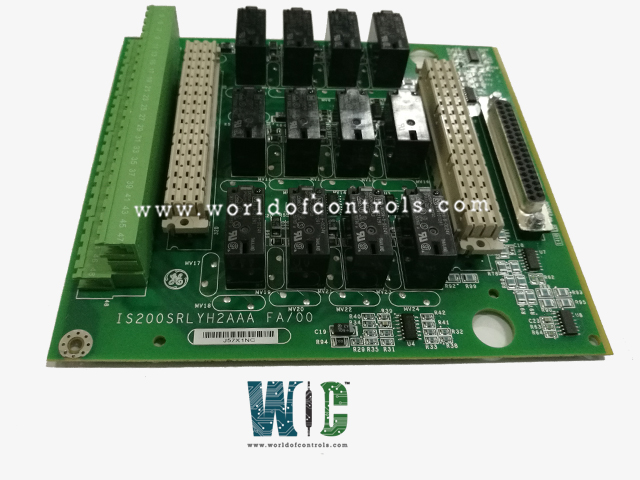
Among the different types of simplex terminal boards, relay terminal boards are particularly important in turbine control systems. These boards are responsible for managing relay outputs that control external devices such as alarms, circuit breakers, and auxiliary equipment.
In operation, the control system sends signals to the relay terminal board when specific conditions are met—such as reaching a temperature limit or triggering a shutdown sequence. The board then activates the appropriate relay to execute the required action.
Key features of these boards include:
Reliable switching for critical control functions
Electrical isolation between control signals and field equipment
Durable design suited for industrial environments
Seamless integration with turbine control architectures
These capabilities make relay terminal boards essential for executing safety and control actions within turbine systems.
Integration Process in Control Systems
The integration of GE simplex terminal boards into turbine control systems involves several structured steps:
1. System Design and Planning
Engineers define system requirements, identify input and output signals, and determine how the terminal board will interface with field devices and the control processor.
2. Installation and Wiring
The terminal board is installed within a control panel, and field wiring is connected according to detailed schematics. Proper labeling and cable management are essential for long-term reliability.
3. Configuration and Testing
Control logic is configured to ensure proper communication with the terminal board. Comprehensive testing is conducted to verify signal accuracy and relay functionality.
4. Operation and Maintenance
During operation, the system is continuously monitored. Simplex configurations make troubleshooting more straightforward, helping reduce downtime and maintenance complexity.
Advantages of Simplex Integration
Simplex terminal boards remain widely used in turbine control systems due to their practical advantages:
Reduced system complexity
Lower installation and maintenance costs
Ease of troubleshooting and replacement
Efficient use of control panel space
While redundant systems are preferred for highly critical applications, simplex solutions are ideal for many standard control functions.
Conclusion
The integration of GE simplex terminal boards into control systems is essential for ensuring effective communication between field devices and control processors in turbine operations. By enabling accurate signal handling and reliable control actions, these boards contribute significantly to system performance and operational safety. Their simplicity, efficiency, and robustness make them a valuable component in modern turbine control environments.
About the Author