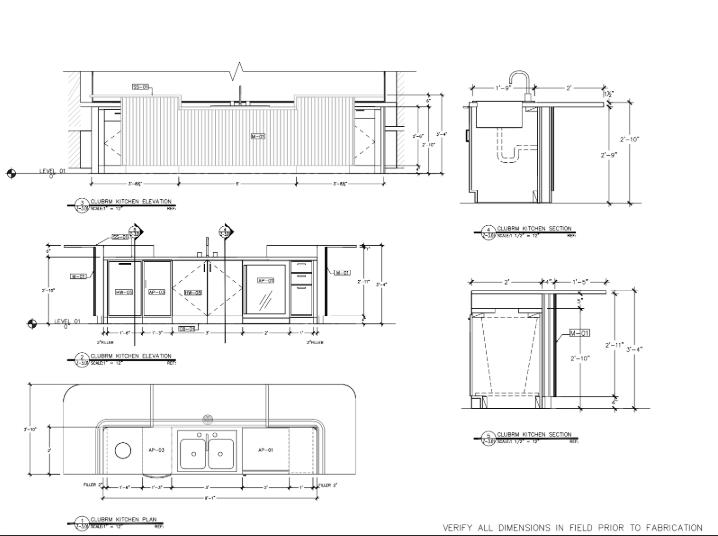
Construction projects involve thousands of moving parts, both literal and metaphorical. While an architect provides the grand vision and the design intent, there is a massive gap between a set of blueprints and the actual fabrication of components. This is where the translation from “what to build” to “how to build it” occurs.
The bridge spanning this gap is the shop drawing. These detailed diagrams act as the manufacturer’s version of the design, ensuring that every beam, cabinet, and electrical conduit fits perfectly before a single piece of material is cut. As we look toward 2026, the reliance on professional Shop drawing services is becoming more critical than ever for keeping projects on time, on budget, and free from costly errors.
The Critical Role of Accuracy in Construction
Architectural and engineering drawings differ significantly from shop drawings. The former illustrates the finished product and general requirements. The latter breaks down these requirements into actionable, fabrication-ready steps. If the architectural drawings are the map, the shop drawings are the turn-by-turn directions.
Accuracy at this stage is non-negotiable. A discrepancy of a fraction of an inch in a steel fabrication drawing can lead to structural components that do not bolt together on-site. This triggers a domino effect: work halts, crews stand idle, materials must be re-ordered, and the budget balloons.
High-quality shop drawings serve as a final checkpoint. They force the general contractor, sub-contractors, and suppliers to verify dimensions and materials against the reality of the job site before fabrication begins. This validation process protects the project timeline and ensures structural integrity.
The Shop Drawing Workflow: From Draft to Approval
Understanding the lifecycle of a shop drawing helps clarify why they are so vital to the critical path of a construction schedule. The process typically follows a rigorous sequence:
1. Interpretation and Creation
The process begins when a sub-contractor or manufacturer receives the construction documents. They (or their outsourced partner) draft detailed diagrams showing how they intend to fabricate and install their specific component. This includes dimensions, manufacturing standards, and installation details.
2. Review and Coordination
Once drafted, these drawings are submitted to the general contractor. The contractor reviews them to ensure they interface correctly with other trades. For example, the HVAC ductwork drawings must be checked against the electrical drawings to ensure they aren’t trying to occupy the same ceiling space.
3. Architect and Engineer Approval
The drawings move up the chain to the design team. The architect and engineer review the submissions to confirm they adhere to the design intent and specifications. They will either mark them as “Approved,” “Approved as Noted,” or “Revise and Resubmit.”
4. Fabrication and Installation
Only after the drawings receive final approval does the physical work begin. The approved shop drawings become the definitive guide for the factory floor and the installation crew.
Benefits of Professional Shop Drawing Services
Outsourcing this complex task has become a standard industry practice. Utilizing specialized Shop drawing services offers distinct advantages that directly impact the bottom line.
conflict Detection and Error Reduction
Modern shop drawing services utilize advanced software to identify clashes before they happen. If a plumbing line interferes with a structural beam, the issue is spotted on the screen, not on the construction site. Resolving these conflicts digitally costs pennies compared to the thousands of dollars required to fix them in the field.
Improved Communication
Construction sites are chaotic. Clear, precise documentation is the only way to ensure everyone is on the same page. Shop drawings provide a universal language for the project, detailing exactly what is being delivered. This clarity reduces disputes between the design team and the contractors regarding what was specified versus what was installed.
Streamlining the Design-to-Build Cycle
Speed is currency in construction. By leveraging external experts, such as Archdraw Outsourcing, firms can accelerate the drafting process. These specialized teams function as an extension of the contractor’s office, scaling up resources when deadlines are tight. This prevents bottlenecks in the approval process and ensures that fabrication slots are not missed.
Future Trends: Technology in 2026 and Beyond
The landscape of shop drawings is evolving rapidly. We are moving away from static 2D lines toward intelligent, data-rich models.
Building Information Modeling (BIM) Integration
By 2026, the integration of shop drawings into BIM environments will be the standard, not the exception. Shop drawings are no longer just flat PDFs; they are being derived directly from 3D models that carry metadata about materials, costs, and maintenance schedules. This allows for “4D” scheduling, where the construction sequence is visualized over time.
AI and Automation
Artificial Intelligence is beginning to automate the tedious aspects of drafting. AI tools can now assist in auto-dimensioning and checking for code compliance, freeing up human drafters to focus on complex connection details and design problem-solving.
Cloud-Based Collaboration
The days of shipping rolls of paper are gone. Cloud-based platforms allow for real-time redlining and approval. All stakeholders—from the architect in the office to the foreman on the tablet—view the most current version of the drawing instantly, eliminating the risk of building from outdated plans.
The Future of Efficient Construction
As projects grow in complexity, the margin for error shrinks. The ability to visualize, verify, and validate every component before installation is the key to profitability.
Shop drawings are the unsung heroes of the construction industry. They facilitate the smooth transition from an abstract design to a concrete reality. By embracing advanced Shop drawing services and partnering with experienced firms like Archdraw Outsourcing, contractors and architects can ensure their vision is built accurately, safely, and efficiently. As we approach 2026, those who prioritize this level of precision will lead the market.
About the Author