How Long-Term Wildlife Studies Are Evolving Through Modern PIT Tagging Techniques
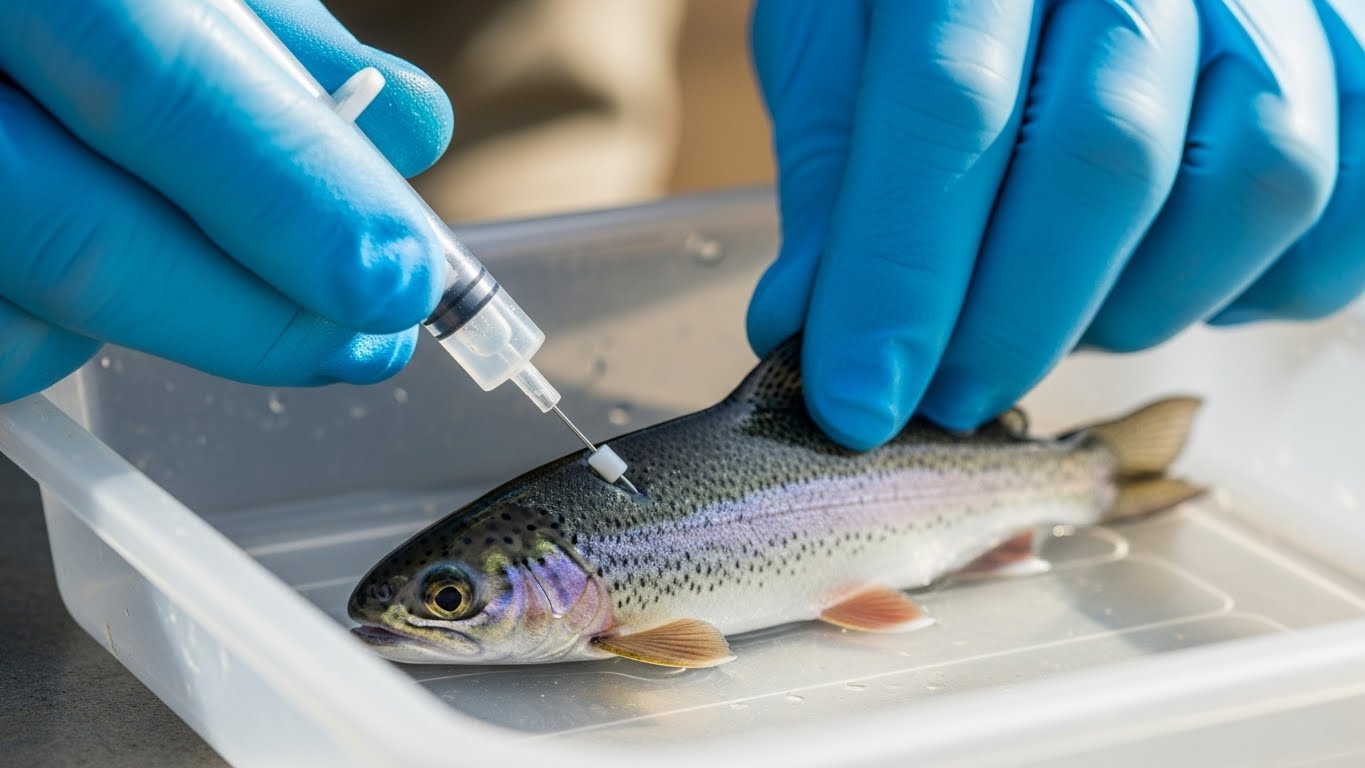
Understanding wildlife populations across decades rather than months has become the cornerstone of effective conservation science. Long-term research programs reveal population trends, document climate change impacts, and identify critical life history patterns invisible in short-term studies. Modern pit tagging techniques have revolutionized these extended investigations, providing reliable individual identification that persists throughout an animal’s entire lifespan and even across generations. For researchers embarking on multi-year monitoring programs, professional pit tagging systems deliver the durability and reliability essential for comprehensive longitudinal studies.
The Foundation: Why Long-Term Studies Matter
Ecological processes unfold over timescales far exceeding typical research grant cycles. Population dynamics, evolutionary adaptations, and ecosystem responses to environmental change require observation spanning decades to reveal meaningful patterns. Yet until recently, conducting truly long-term individual-based studies remained extraordinarily challenging.
Traditional marking methods deteriorated over time—paint faded, bands corroded, and external tags detached. Research published in the Journal of Wildlife Management documented that conventional external markers showed retention rates below 60% after five years, rendering decade-spanning studies nearly impossible. Animals surviving 10-15 years often lost all identification, transforming into anonymous individuals despite years of prior observation.
Pit tagging solved this fundamental limitation. Glass-encapsulated transponders implanted subcutaneously function indefinitely without batteries, degradation, or loss. Tags implanted in juvenile fish in 1990 remain perfectly readable today, enabling researchers to track individuals across their entire 35-year lifespans. This permanence transformed wildlife research from snapshot studies into comprehensive life history investigations.
Multi-Generational Population Dynamics
Perhaps the most powerful application of modern passive integrated transponder tagging involves tracking family lineages across multiple generations. By tagging offspring and monitoring their survival, reproduction, and dispersal patterns, researchers can test evolutionary hypotheses and document population processes operating over decades.
The Kluane Red Squirrel Project in Canada’s Yukon Territory exemplifies this approach. Since 1987, researchers have tagged over 20,000 squirrels, creating a pedigree database spanning eight generations. This unprecedented dataset revealed that maternal inheritance of territory quality affects offspring fitness for three subsequent generations—patterns completely invisible in shorter studies.
Similarly, long-term passive integrated transponder tagging programs monitoring amphibian populations in Europe have documented genetic bottlenecks following habitat fragmentation. By tracking individuals across 25+ years, researchers proved that seemingly stable populations actually suffered from reduced genetic diversity, manifesting as decreased hatching success only after two decades—a warning sign no short-term study could detect.
Climate Change Response Documentation
Understanding how wildlife responds to shifting environmental conditions requires observations spanning sufficient time for climate trends to manifest clearly. Pit tagging enables researchers to connect individual fate to specific environmental changes across decades.
Salmon research in Alaska provides compelling examples. Studies tagging juvenile salmon since the 1980s have documented systematic shifts in migration timing correlating precisely with warming stream temperatures. Fish now migrate two weeks earlier than 40 years ago—a response documented only through continuous individual-level monitoring across decades.
British bird populations monitored through PIT-tagged individuals have revealed similar patterns. Great tits breeding in forests near Oxford, England, have been tagged since 1960, creating one of the world’s longest continuous wildlife datasets. Analysis shows that breeding phenology has advanced by 12 days since 1970, tracking spring temperature increases but creating mismatches with caterpillar prey emergence timing—demonstrating how climate change disrupts ecological synchrony.
European common frog populations tracked through passive integrated transponder tagging since 1990 show shifting breeding site selection. Frogs increasingly abandon traditional ponds that now dry before metamorphosis completes, selecting alternative sites with longer hydroperiods. This behavioral plasticity, essential for population persistence under climate change, only became apparent through multi-decade individual tracking.
Survival Rate Precision and Life Table Construction
Accurate survival estimation requires repeated observations of known individuals across years. Traditional mark-recapture methods suffered from confounding mortality with tag loss—did an unmarked animal lose its tag or die? Passive integrated transponder tagging eliminates this ambiguity, providing true survival estimates unbiased by marking failures.
Long-term turtle research demonstrates this advantage powerfully. Painted turtles in Michigan have been tagged since 1975, creating 50-year individual histories. Data reveals that adult survival rates exceed 95% annually, but juvenile survival varies dramatically (40-80%) based on summer weather patterns. Only through decades of continuous monitoring did the critical importance of early life conditions become clear.
These precise survival estimates enable construction of detailed life tables revealing population growth rates, generation times, and demographic vulnerabilities. Conservation managers use this information to identify which life stages most influence population persistence, targeting interventions where they’ll prove most effective.
Habitat Use and Movement Patterns Across Lifespans
Many species exhibit complex habitat requirements changing throughout their lives. Juveniles, adults, and breeding individuals may utilize completely different environments. Understanding these shifting requirements demands following individuals from birth to death.
Salmonid research utilizing pit tagging has revolutionized understanding of habitat connectivity requirements. Studies tagging juvenile coho salmon revealed that fish use different stream reaches during summer rearing, fall pre-migration staging, and winter refugia periods. Protection strategies must therefore maintain connectivity between all three habitat types—knowledge gained only through individual tracking across annual cycles.
European eel research provides even more dramatic examples. Eels tagged in freshwater systems have been tracked through decades of continental residence before migrating to Atlantic spawning grounds. These studies documented that individuals remain in freshwater 8-20 years before maturation—variation impossible to detect without individual-level tracking across decades.
Disease Ecology and Parasite Dynamics
Long-term health monitoring of individually identified animals reveals disease transmission dynamics, parasite load effects on survival, and population-level disease resistance patterns. Pit tagging enables researchers to track infection histories across lifespans, documenting chronic disease impacts invisible in cross-sectional studies.
Amphibian populations monitored through multi-decade tagging programs have provided critical insights into chytrid fungus dynamics. Long-term data from Colorado revealed that infection rates fluctuate on 8-10 year cycles, with population crashes following high-infection periods. Understanding these multi-year dynamics proved essential for predicting population vulnerability—predictions impossible from short-term snapshots.
Fish parasite studies using PIT-tagged individuals have documented how early-life parasite exposure affects adult reproductive success. Salmon infected as juveniles show 15-25% reduced spawning success years later—delayed effects only detectable through individual tracking from juvenile stages through reproduction.
Behavioral Consistency and Personality Research
Do individual animals maintain consistent behavioral traits throughout their lives? This fundamental question requires observing the same individuals across years or decades. Passive integrated transponder tagging enables exactly this type of investigation.
Research on three-spined sticklebacks in British Columbia used PIT-tagged individuals to demonstrate that boldness—measured as time to emerge from shelter—remains consistent across multiple breeding seasons. Bold individuals consistently breed earlier but suffer higher predation mortality. This behavioral syndrome, stable across five-year lifespans, influences both reproductive success and survival, demonstrating personality’s fitness consequences.
Similarly, studies of individually tagged songbirds revealed that innovative foraging behavior measured in juveniles predicts exploratory behavior as adults, affecting territory selection and breeding success. These connections between early-life behavior and adult fitness emerged only through multi-year individual-level observations.
Demographic Transitions and Population Structure
Wildlife populations rarely maintain stable structures—age distributions, sex ratios, and social organization shift over time. Long-term pit tagging programs document these transitions, revealing how populations respond to environmental change or management interventions.
Cutthroat trout populations in Yellowstone streams have been monitored through tagging since 1980. Data revealed a systematic demographic shift following invasive lake trout establishment—native cutthroat populations now skew toward younger, smaller individuals as adult survival declined. This demographic transition, occurring gradually over 15 years, provided early warning of invasive species impacts before population collapse became obvious.
European badger populations monitored through PIT-tagged individuals over 40 years have revealed how social group structure responds to disease and culling. Groups maintain territories across decades, but membership turnover rates vary dramatically based on tuberculosis prevalence and human management actions. Understanding these dynamics required continuous individual-level monitoring impossible without permanent identification.
Reproductive Success Across Lifetimes
Lifetime reproductive success—the total number of offspring produced during an individual’s life—represents the ultimate measure of evolutionary fitness. Calculating this metric requires tracking individuals from birth through death while monitoring all reproductive events.
Passive integrated transponder tagging has enabled groundbreaking lifetime fitness studies. Research on Soay sheep on Scottish islands, using tags implanted since 1985, revealed that breeding early in life enhances lifetime success more than living longer—contradicting assumptions that longevity drives fitness. This insight emerged only from complete lifetime reproductive histories spanning 30+ years.
Salmon tagging programs provide even more comprehensive fitness data. By tagging juveniles and monitoring returns years later, researchers calculate complete lifetime reproductive success including variation in marine survival, adult migration timing, and spawning success. Studies revealed that just 10% of tagged individuals produce 50% of offspring—extreme fitness variation only quantifiable through comprehensive lifetime tracking.
Methodological Advances Enhancing Long-Term Studies
Modern pit tagging techniques incorporate technological innovations that amplify research power. Miniaturization enables tagging ever-smaller individuals, expanding taxonomic scope. Tags now exist small enough for larval amphibians and juvenile fish weighing under one gram—species previously untouchable for long-term studies.
Detection technology evolution has proven equally important. Early tagging programs required manual scanning with portable readers—labor-intensive work limiting observation frequency. Modern automated detection arrays continuously monitor tagged populations without human presence, generating millions of observations impossible through manual surveys.
The Columbia River’s extensive PIT tag detection infrastructure logged over 8 million tag detections in 2024 alone, creating datasets of unprecedented temporal resolution. Researchers can now analyze migration timing at hourly precision, revealing patterns invisible in weekly manual surveys.
Data Integration and Analytical Sophistication
Long-term tagging programs generate massive datasets requiring sophisticated analytical approaches. Modern statistical methods developed specifically for mark-recapture data extract maximum information from observation histories.
Bayesian hierarchical models now enable researchers to estimate survival rates even when detection probabilities remain uncertain and vary over time. These methods account for missing observations—tags present but not detected—preventing biased survival estimates that plagued earlier analyses.
Machine learning algorithms applied to decades of tagging data can identify complex patterns predicting survival and reproduction. Random forest models analyzing 30 years of salmon tagging data revealed non-linear relationships between ocean conditions and marine survival—interactions too complex for traditional statistical approaches.
Conservation Applications and Management Outcomes
Perhaps most importantly, long-term passive integrated transponder tagging studies translate directly into conservation successes. By documenting population trends before they become catastrophic and identifying specific limiting factors, extended monitoring enables proactive rather than reactive management.
Pacific salmon ESA listings relied heavily on long-term tagging data demonstrating systematic population declines. Subsequent recovery efforts targeted specific life stages and habitats identified through tagging studies as critical bottlenecks. After 20 years of adaptive management informed by continuous tagging data, several populations now show recovery trends.
European amphibian conservation similarly benefits from multi-decade tagging programs. Long-term data proved that maintaining connectivity between breeding ponds and terrestrial habitat was more important than protecting either habitat type alone—insight that reshaped conservation strategies throughout Europe.
Challenges and Future Directions
Despite tremendous successes, long-term pit tagging programs face ongoing challenges. Maintaining funding across decades proves extraordinarily difficult—grant cycles rarely exceed five years, yet meaningful results often require 10-20 years of continuous effort. Successful programs typically rely on institutional commitments or creative funding diversification.
Personnel continuity similarly challenges long-term studies. Graduate students complete degrees and move on, while principal investigators retire. Maintaining protocols and institutional knowledge across these transitions requires deliberate planning and documentation.
Future developments in biologging technology promise to enhance long-term studies further. Tags incorporating physiological sensors will enable researchers to track not just survival and movement but also stress levels, metabolic rates, and body condition across lifespans—comprehensive health monitoring impossible today.
Conclusion
Modern pit tagging techniques have transformed wildlife research from snapshot observations into comprehensive lifetime investigations. The permanence, reliability, and minimal impact of PIT technology enables tracking individuals from birth through death and across generations—observation timescales matching ecological and evolutionary processes themselves. These extended studies have revealed climate change responses, documented demographic transitions, quantified lifetime fitness variation, and informed conservation strategies with unprecedented precision. As wildlife faces accelerating environmental challenges, the detailed, long-term understanding provided by passive integrated transponder tagging programs becomes increasingly essential for effective conservation. Investing in these extended monitoring efforts represents investing in the fundamental knowledge base necessary for preserving biodiversity in a changing world.
About the Author