High-speed rotating machinery, such as turbine generators and large industrial compressors, demands precise excitation control to maintain rotor stability during transients like grid faults or sudden load rejections. Dynamics Discharge GE Boards, integral to GE’s EX2100 and Mark VI excitation systems, manage DC-link energy discharge to prevent voltage overshoots that destabilize fields and induce torsional vibrations. This article examines their role, functions, and impact on mechanical-electrical stability in demanding applications.
Introduction to Dynamics Discharge GE Boards
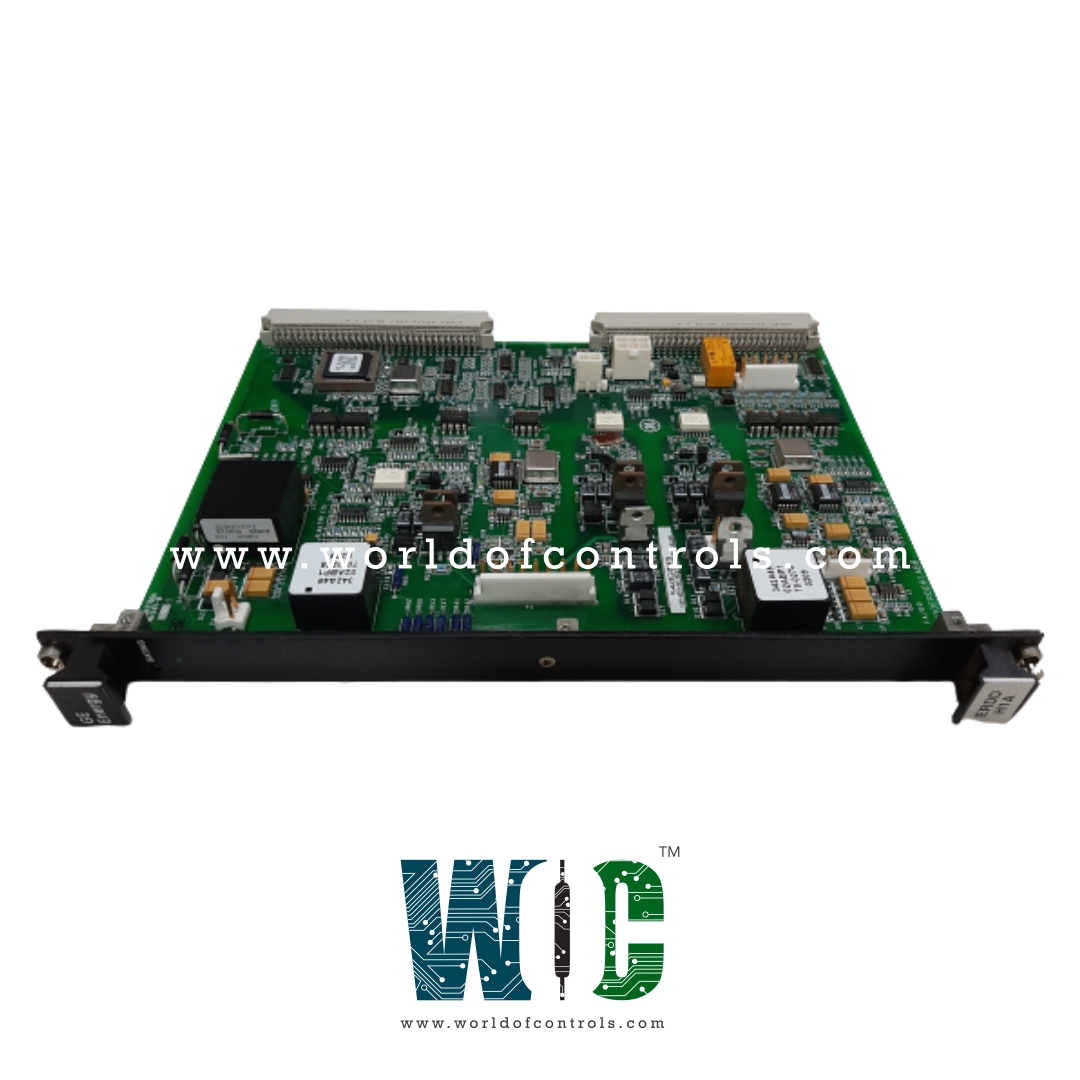
Dynamics Discharge Boards handle stored energy in IGBT-based exciter bridges, activating during trips to safely dissipate DC-link capacitance without arcing or component stress. In GE systems like IS200ERDDH1A, they pair with exciter regulators to monitor bridge health and coordinate shutdowns, critical for machinery spinning at 3600-18000 RPM where instability risks amplify exponentially. Controlled discharge directly supports rotor dynamics by avoiding field collapse that triggers subsynchronous resonance or shaft fatigue.
Role in High-Speed Rotating Machinery
These boards interface via backplane with EX2100 controllers, regulating field current while providing feedback on bridge current/voltage during acceleration, synchronization, and disturbances. In synchronous generators coupled to gas turbines, rapid energy dumping maintains flux continuity, reducing rotor angle swings that exceed 90° and stress couplings. By stabilizing excitation, they mitigate torsional oscillations propagated through shafts, enhancing overall rotordynamic margins per API 670 guidelines.
Key Functions and Internal Features
Core operations include dynamic braking resistors activated on overvoltage (>1100VDC), voltage-controlled oscillator (VCO) feedback for precise sensing, and RTD inputs monitoring heatsink temperatures up to 85°C. Redundant power feeds from DC-link ensure failover, while isolated supplies power gate drivers and diagnostics during faults. Overcurrent protection trips bridges in <10ms, feeding status to turbine protection modules to coordinate mechanical overspeed safeguards.
Enhancing System Stability and Protection
Uncontrolled DC-link discharge causes generator overshoot, amplifying subsynchronous vibrations (10-50Hz) that coincide with rotor natural frequencies, leading to bearing wear or cracked shafts. These boards clamp transients within 20% overshoot, enabling protective relays to clear faults without cascading instability. Accurate VCO signals refine PID tuning in closed-loop control, damping oscillations and supporting grid code compliance for frequency ride-through in renewables-integrated grids.
Simplex vs Redundant Architectures
Simplex setups suit smaller drives with single-board discharge, while redundant M1/M2/C configurations in Frame HA turbines distribute load across paralleled units, achieving 99.99% availability. Voting logic cross-checks feedback, isolating failed paths without excitation loss—vital for continuous processes where single failures propagate to mechanical trips. This architecture halves mean-time-to-failure in high-inertia rotors.
Application Scenarios and Best Practices
Deployed in 500MW+ steam turbine generators, compressor trains, and marine propulsion, boards excel during blocked rotor events or AVR failures. Best practices: Verify resistor continuity quarterly via ToolboxST diagnostics, ensure convective cooling with 1m/s airflow, and baseline VCO linearity pre-commissioning. Firmware updates address drift in feedback loops, with hot-swappable design minimizing outages.
The IS200ERDDH1A Dynamics Discharge GE Board exemplifies reliability in excitation stability, safeguarding high-speed rotors through rapid energy management and precise monitoring. World of Controls supplies new, refurbished, and exchange IS200ERDDH1A units with full testing, rapid delivery, and expert support for GE turbine applications. Integrate this board to fortify your rotating machinery against electrical transients
Read also – IS200TDBSH2A – T DISCRTE SIMPLEX
About the Author