As ecommerce continues to grow globally, managing logistics and supply chains has become more complex for online retailers. Businesses must coordinate inventory storage, order processing, shipping, and delivery while maintaining speed and accuracy. Without efficient systems in place, these operations can quickly become overwhelming.
This is where 3PL logistics (third-party logistics) plays a crucial role. By outsourcing logistics operations to specialized providers, ecommerce businesses can streamline their supply chains, reduce operational costs, and focus on growth. 3PL providers manage key logistics processes, allowing businesses to operate more efficiently without building their own complex infrastructure.
What Is 3PL Logistics?
3PL logistics refers to outsourcing supply chain and logistics operations to a third-party company that specializes in handling warehousing, inventory management, order fulfillment, and shipping.
Many ecommerce brands rely on platforms like Shopify, Amazon, and WooCommerce to sell their products online. However, managing the logistics behind these sales requires efficient systems and resources.
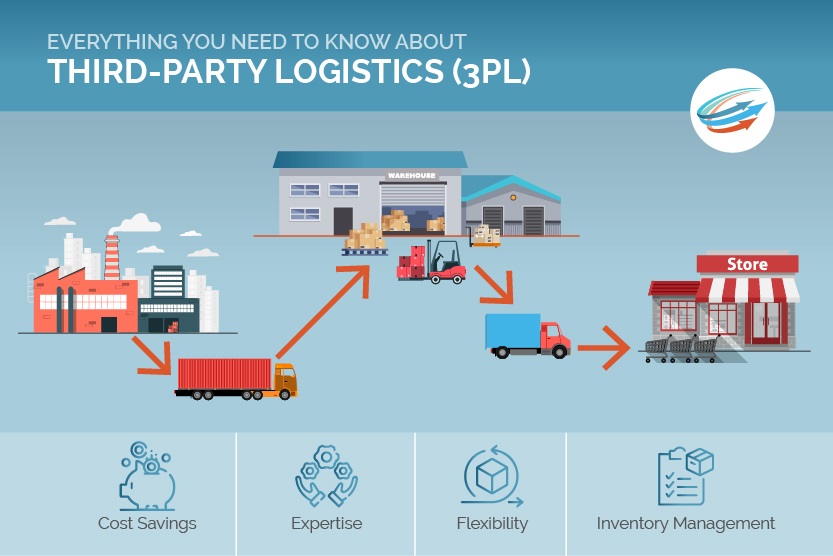
A 3PL provider takes responsibility for key logistics tasks such as:
Receiving inventory from suppliers
Storing products in organized warehouses
Managing inventory levels
Picking and packing orders
Shipping products to customers
By outsourcing these operations, ecommerce companies can simplify their supply chains and focus on scaling their businesses.
Centralized Inventory Management
One of the biggest challenges in ecommerce supply chains is maintaining accurate inventory across multiple sales channels. Without proper systems, businesses may experience stock shortages, overselling, or excess inventory.
3PL logistics providers offer centralized inventory management systems that allow businesses to track stock levels in real time. These systems integrate with ecommerce platforms and automatically update inventory as orders are placed.
Benefits of centralized inventory management include:
Real-time inventory tracking
Reduced risk of stockouts
Better demand forecasting
Improved inventory accuracy
With better inventory visibility, ecommerce businesses can make smarter decisions and avoid costly mistakes.
Faster and More Efficient Order Fulfillment
Order fulfillment is one of the most critical parts of ecommerce logistics. Customers expect fast and accurate deliveries, and delays can negatively impact customer satisfaction.
3PL providers operate professional fulfillment centers designed for efficient order processing. Their teams follow optimized workflows to ensure orders are picked, packed, and shipped quickly.
Key advantages of 3PL fulfillment include:
Faster order processing times
Reduced packing errors
Improved shipping efficiency
Better handling of large order volumes
By streamlining fulfillment operations, 3PL logistics providers help ecommerce businesses deliver a better customer experience.
Reduced Operational Costs
Building and maintaining an in-house logistics infrastructure can be expensive. Ecommerce businesses must invest in warehouse space, storage equipment, staff, and shipping systems.
3PL logistics providers already have the infrastructure and expertise needed to manage supply chains efficiently. By outsourcing logistics operations, businesses can reduce overhead costs and avoid large upfront investments.
Cost benefits of 3PL logistics include:
Lower warehouse expenses
Reduced labor costs
Access to advanced logistics technology
Competitive shipping rates
This allows ecommerce companies to allocate more resources toward marketing, product development, and business growth.
Scalable Logistics Solutions
As ecommerce businesses grow, their logistics requirements also increase. Seasonal sales events, product launches, and marketing campaigns can lead to sudden spikes in order volume.
Managing these fluctuations internally can be challenging. Hiring additional staff, expanding warehouse space, and upgrading systems requires time and investment.
3PL logistics providers offer scalable solutions that adapt to changing demand. Their facilities and teams can handle increases in order volume without disrupting operations.
Scalable logistics allows ecommerce businesses to:
Manage peak seasons efficiently
Expand into new markets
Handle higher order volumes
Maintain consistent delivery performance
This flexibility is essential for companies looking to scale their operations successfully.
Improved Shipping and Delivery
Shipping plays a major role in ecommerce supply chains. Customers expect affordable shipping options and reliable delivery times.
3PL providers often partner with multiple shipping carriers, allowing them to negotiate better rates and offer various delivery options. These partnerships help ecommerce businesses reduce shipping costs while improving delivery speed.
Many 3PL providers also offer shipment tracking systems that give customers real-time updates about their orders. This transparency improves the overall customer experience and builds trust with buyers.
Focus on Core Business Growth
Managing logistics internally can consume significant time and resources. Ecommerce founders and teams may spend hours dealing with inventory issues, packing orders, and coordinating shipments.
By outsourcing logistics to a 3PL provider, businesses can focus on strategic activities such as:
Marketing and customer acquisition
Product development
Brand building
Expanding into new markets
This shift allows companies to prioritize growth instead of being overwhelmed by operational tasks.
Conclusion
Efficient supply chain management is essential for the success of any ecommerce business. As order volumes grow, managing logistics internally becomes increasingly complex and costly.
3PL logistics simplifies ecommerce supply chains by providing centralized inventory management, faster order fulfillment, scalable warehouse solutions, and improved shipping services. By partnering with a reliable 3PL provider, ecommerce businesses can streamline their operations, reduce operational challenges, and focus on building a strong and scalable brand in the competitive online marketplace.
About the Author