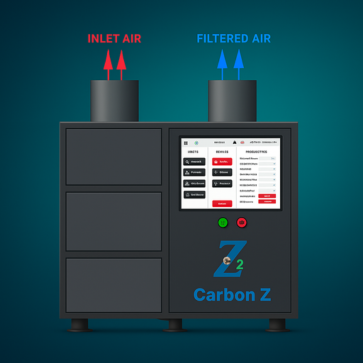
Industrial facilities face constant carbon dioxide risks from welding, combustion processes, confined spaces, and emergency shutdowns where ventilation fails. Elevated levels cause worker fatigue, impaired judgment, and potential fatalities, violating OSHA standards above 5000 parts per million. The best CO2 removal system maintains safe air quality through regenerative scrubbing technology, ensuring compliance, productivity, and lives saved during operations or crises.
Carbon Dioxide Hazards in Industrial Environments
Workers exhale approximately 1 kilogram of carbon dioxide daily, while processes like welding and fermentation generate additional volumes, pushing concentrations to 1 percent within hours in enclosed areas. This threshold induces headaches, dizziness, and reduced reaction times, escalating accident risks. Levels reaching 5 percent produce toxicity affecting respiratory function, with 10 percent causing unconsciousness or death. External exhaust systems introduce contaminants during hazardous releases, and standard filters address particulates but not internal gas accumulation.
A superior CO2 removal system deploys chemical media such as amines or zeolite to capture and vent carbon dioxide continuously, holding concentrations below 0.5 percent. Internal recirculation with overpressure prevents external pollutants from entering, supporting uninterrupted operations.
Key Requirements for Industrial CO2 Removal Systems
Top systems process 500 to 2000 cubic meters per hour to cover factory floors, warehouses, and processing rooms accommodating dozens of workers. Regenerative designs alternate multiple beds for nonstop performance, eliminating downtime for media changes. Low power consumption under 2 kilowatts integrates with plant generators, while rugged construction withstands vibrations, dust, and temperature extremes common in industrial settings.
Digital monitoring tracks carbon dioxide, oxygen, and pressure in real time, with automatic alarms and data logging for regulatory audits. Compliance with ISO 45001 and OSHA ensures legal operation during inspections.
Recommended Solution: High-Capacity Regenerative CO2 Removal System
Industrial leaders select 1000 cubic meters per hour regenerative CO2 removal systems for comprehensive coverage. These feature four-bed configurations where one unit scrubs air while others regenerate via automated thermal or vacuum cycles, achieving 95 percent efficiency. Wall or floor-mounted units occupy minimal space, with modular expansion for growing facilities.
Overpressure blowers maintain positive internal pressure against smoke or fumes, and multi-stage filtration removes particulates, volatile organic compounds, and odors. Touchscreen interfaces enable zone control for targeted areas like welding bays, with remote access via plant networks. Power redundancy supports generator tie-ins and uninterruptible supplies for blackout resilience.
Advanced Features Enhancing Industrial Safety
Integrated sensors detect carbon dioxide rises above 1000 parts per million, triggering automatic mode shifts and evacuations alerts. Battery backups provide 24 hours of operation, extendable with plant UPS systems. Vibration-proof casings and IP65 ratings protect against factory conditions, while washable pre-filters extend media life by 30 percent.
Seamless pairing with fire suppression, NBC filtration, and ventilation controls forms complete safety ecosystems. Annual media regeneration costs remain under $1000, delivering rapid return on $12,000 to $25,000 investments through avoided downtime and fines.
Installation Process for Industrial Applications
Position units centrally near high-risk zones, securing with heavy-duty mounts rated for seismic activity. Connect 100-to-200-millimeter ducts to existing HVAC, applying industrial sealants for gastight joints. Electrical integration requires dedicated 3-phase circuits with surge protection, linking to SCADA systems for centralized monitoring. Commissioning involves 48-hour load tests simulating peak occupancy, calibrating sensors to factory baselines.
Certified technicians complete setup in 2 to 3 days, minimizing production interruptions.
Operational Benefits for Industrial Productivity
Reliable CO2 removal prevents mandatory shutdowns from air quality violations, maintaining worker focus and output. Reduced fatigue lowers error rates by 40 percent in prolonged shifts, while overpressure containment limits incident spread. Compliance documentation streamlines insurance renewals and audits, with logged data proving due diligence.
Scalable designs adapt to expansions, supporting 24/7 operations in chemical plants, refineries, and manufacturing.
Maintenance Protocols for Continuous Uptime
Daily status checks via app confirm operational status, with monthly filter cleaning and sensor calibration. Quarterly full-load simulations verify performance under stress. Professional annual servicing regenerates beds and updates firmware, scheduled during planned outages. Remote diagnostics minimize on-site visits, ensuring 99 percent availability.
Spare parts inventory prevents delays, with media lasting 2000 hours per cycle.
Cost Justification and Long-Term Savings
Initial $15,000 to $30,000 investments yield payback within 18 months through eliminated OSHA penalties averaging $15,000 per violation, reduced medical claims, and zero lost production days. Lifecycle expenses drop 85 percent versus disposable systems requiring frequent canisters. Energy efficiency saves $2000 annually in electricity compared to constant ventilation.
About the Author