Starting a non-governmental organization (NGO) begins with a simple desire to help others. Whether your goal is to improve education, provide healthcare, or protect the environment, setting up a formal structure gives your mission legs. It establishes trust with donors, allows you to hire staff legally, and helps you work alongside government initiatives.
However, moving from an idea to an officially recognized organization requires navigating a few legal channels. Here is a practical look at the procedure to start a ngo in India, broken down into clear, manageable steps.
Step 1: Define Your Core Mission and Vision
Before filling out any legal forms, you need absolute clarity on what your organization will do. A vague goal like “helping people” makes it difficult to get registered or attract funding.
Take the time to answer these core questions with your founding team:
What specific problem are you solving? (e.g., teaching digital literacy to underprivileged children, feeding stray animals, or supporting rural artisans).
Who is your target audience?
How will you achieve your goals? (e.g., through weekly workshops, physical shelters, or direct financial aid).
Having a well-defined mission statement makes the drafting of your constitution much easier later on.
Step 2: Choose the Right Legal Structure
In India, you can register an NGO under three distinct legal structures. Each has its own rules, governance style, and operational benefits. Choosing the right one depends on your long-term goals and how you plan to manage the organization.
1. Charitable Trust
A public charitable trust is one of the oldest forms of a non-profit. It is relatively easy to set up and works well if a small group of people wants to manage an endowment or property for a public cause. The management is entirely in the hands of the trustees, and there is less ongoing regulatory paperwork compared to a company.
2. Registered Society
If you want an organization run by a democratic governing body where members vote on decisions, a society is a great choice. It requires at least seven individuals to come together. A society is highly flexible but requires maintaining annual member lists and holding regular meetings.
3. Section 8 Company
This is a modern non-profit structure registered under the Ministry of Corporate Affairs. Even though it is registered as a company, it cannot distribute profits to its shareholders; all income must go back into the social cause. It has the highest level of legal credibility, making it a preferred choice for large corporate donors and international grants.
Step 3: Gather the Required Paperwork
Once you decide on the structure, you need to collect documentation from all the founding members. Having these ready prevents delays during the filing stage.
The essential checklist includes:
Identity Proof: PAN card, Aadhaar card, or passport for all promoters, trustees, or directors.
Address Proof: Latest utility bills (electricity or water) or bank statements showing current addresses.
Registered Office Proof: A recent electricity bill or property tax receipt for the office space. If the property is rented, you need a No Objection Certificate (NOC) from the landlord along with a valid rent agreement.
Step 4: Draft Your Governing Documents
This is the most critical legal step in the process. Your governing documents act as the rulebook for your organization. They state your objectives and explain exactly how your NGO will run on a day-to-day basis.
For a Trust: You must draft a Trust Deed. This document outlines the powers of the trustees, how new trustees are appointed, and how funds are managed.
For a Society: You need a Memorandum of Association (MoA) and Rules & Regulations. The MoA lists the names and occupations of the members, while the rules define how meetings are called and how office bearers are elected.
For a Section 8 Company: You require a Memorandum of Association (MoA) and Articles of Association (AoA) which detail the non-profit objectives and internal management processes.
Step 5: File for Official Registration
With your documents drafted and your team ready, you can proceed with the formal submission.
Trusts are registered at the local Sub-Registrar’s office. All trustees must physically appear to sign the deed in front of the registrar.
Societies are registered with the state’s Registrar of Societies. You submit your application along with the signed MoA and a small registration fee.
Section 8 Companies are processed entirely online through the Ministry of Corporate Affairs (MCA) portal. You must first apply for a Digital Signature Certificate (DSC) and Director Identification Number (DIN), reserve your company name, and then file the incorporation forms.
Step 6: Post-Registration Formalities
Getting your registration certificate is a huge milestone, but your legal setup isn’t quite finished. To operate cleanly and accept donations, you must complete three final administrative tasks:
Apply for a PAN and TAN
Your NGO needs its own Permanent Account Number (PAN) and Tax Deduction and Collection Account Number (TAN). These are essential for tax purposes and filing annual returns.
Open a Bank Account
All financial transactions must be transparent. Open a dedicated current account in the name of your NGO. Never mix personal funds with organizational donations.
Secure Tax Exemptions (12A and 80G)
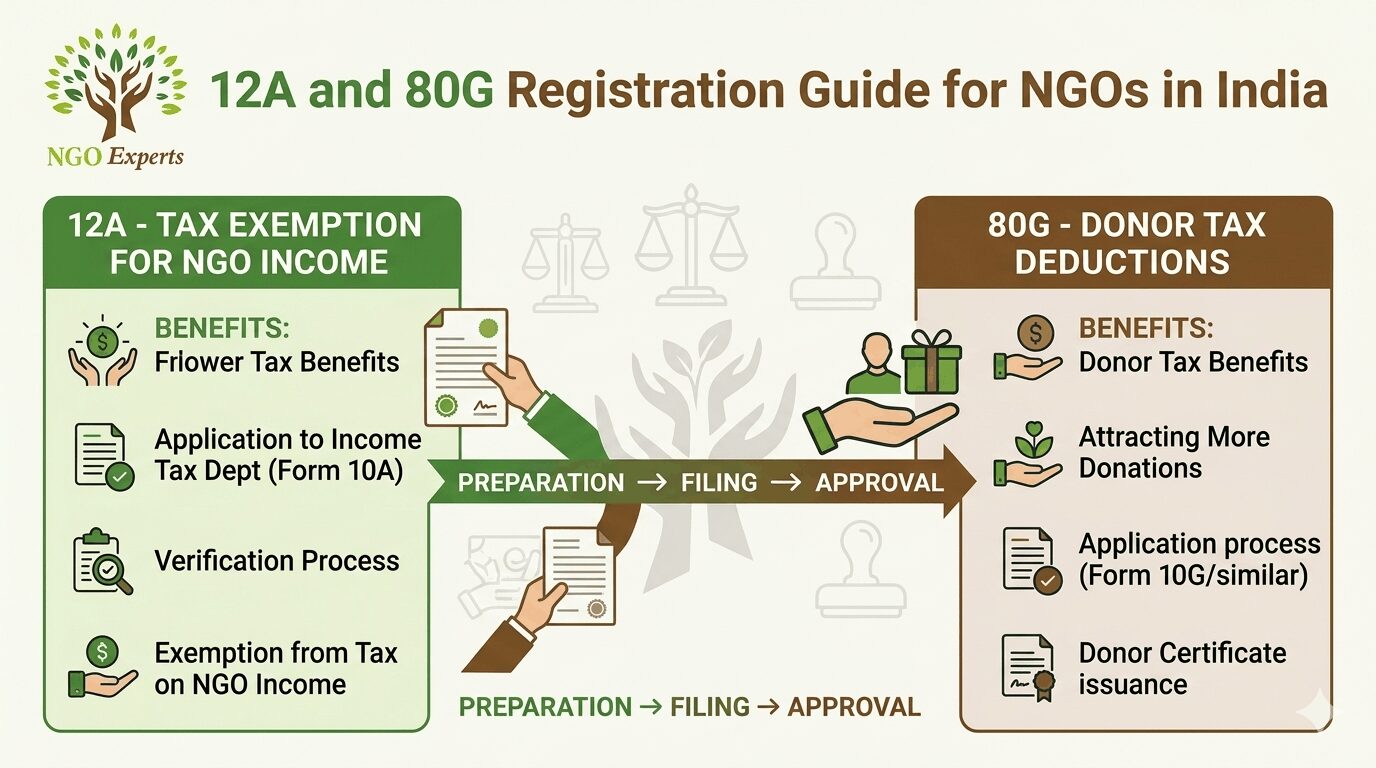
To attract serious donors, apply for 12A and 80G certifications from the Income Tax Department. A 12A registration exempts your NGO’s income from income tax, while an 80G certificate allows your donors to claim a tax deduction on the money they contribute to your cause.
Moving Forward with Your Vision
Starting an NGO is a noble journey that requires equal parts passion and legal diligence. While the legal paperwork might feel overwhelming at first, following these steps systematically ensures your organization rests on a strong, compliant foundation.
If you want to save time and ensure your legal filings are completely error-free, the team at NGOExperts is here to handle the entire process for you. From choosing the right structure to securing your tax exemptions, we manage the paperwork so you can focus entirely on making a difference in your community. Reach out to us today to get your registration started.
About the Author