Dress codes have changed. The office has changed. Your footwear probably hasn’t kept up — here’s how to fix that.
The rules around what to wear to work have never been more unclear — and that’s actually a good thing. The rigid dress codes that once dictated a polished oxford Monday through Friday, no exceptions, have softened considerably. Hybrid schedules, open-plan offices, creative industries bleeding into traditionally formal ones — all of it has created a workplace where the definition of “appropriate” is wider than it’s ever been.
But wider doesn’t mean anything goes. The stakes of getting your footwear wrong at work haven’t disappeared — they’ve just shifted. Nobody’s going to raise an eyebrow at clean sneakers in most offices anymore. They will notice if you show up looking like you grabbed whatever was closest to the door. The goal in 2026 is intentional, not formal. And that requires knowing what actually works in your specific environment.
First, know your workplace temperature
Before anything else, be honest about where you work and what the culture actually looks like day to day — not what the employee handbook says, but what people are actually wearing. A law firm and a design studio both have “business casual” policies that look nothing alike in practice. A tech company’s “no dress code” is different from a startup’s “no dress code.” Read the room before you buy a single pair of shoes for work purposes.
That said, there are some reliable categories that cover most workplaces in 2026, and understanding them makes the decision a lot easier than agonizing over individual pairs.
The oxford and derby — still the anchor of professional footwear
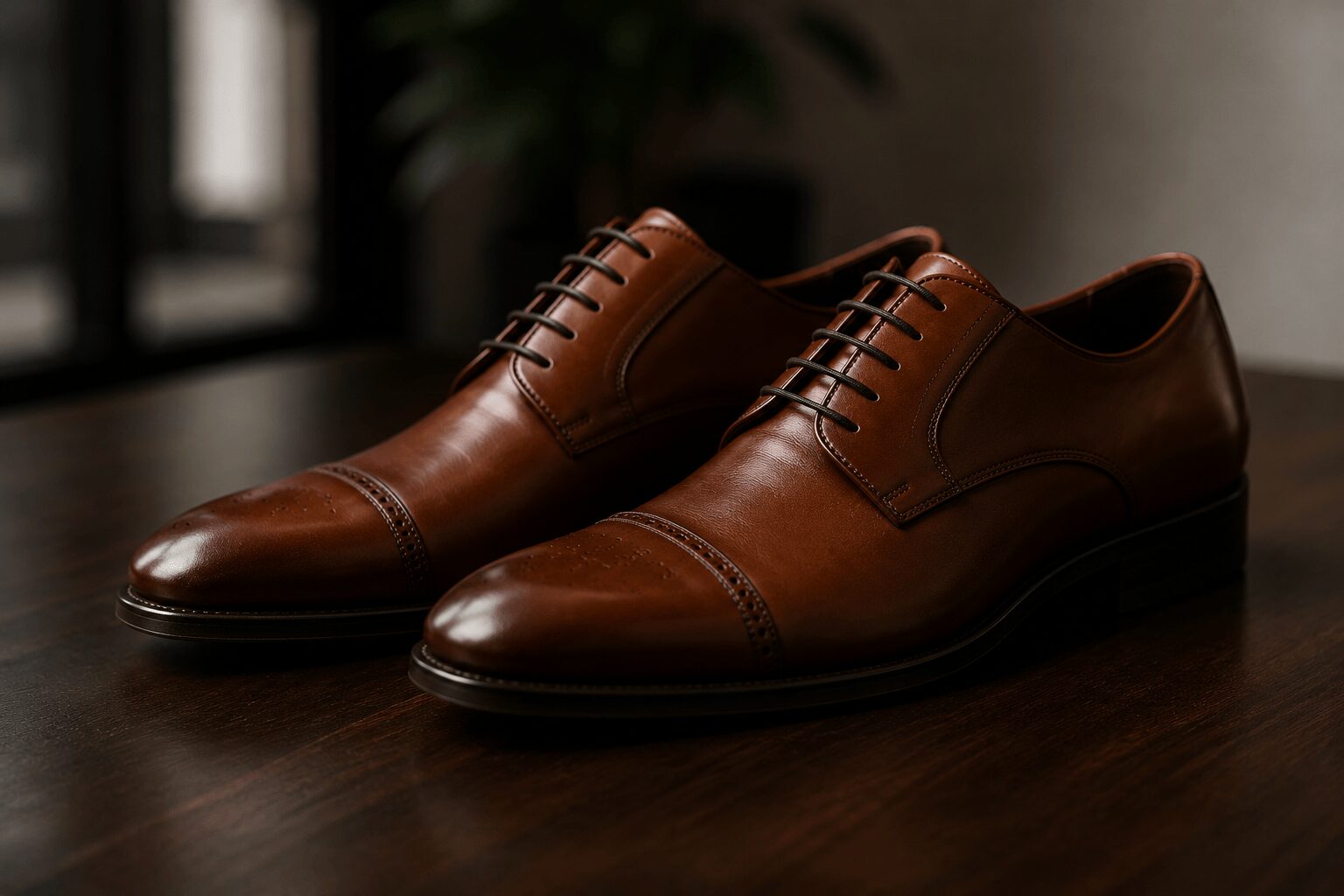
For environments where formality still matters — finance, law, client-facing roles, formal presentations — the oxford and derby haven’t lost their relevance. A cap-toe oxford in black or dark brown remains the most reliable dress shoe a man can own. It’s unambiguous. It says you understood the assignment without needing to be told.
The modern version of this, though, has loosened slightly. A plain-toe derby in a lighter brown or even a cognac leather reads as professional without feeling stiff. Paired with tailored trousers and a jacket, it hits the right note for most formal workplace settings without looking like you’re heading to a courthouse. The key is leather quality and fit — a cheap oxford that creases badly or a pair that’s slightly too long will undercut an otherwise sharp outfit every time.
One polish and a pair of cedar shoe trees. That’s all it takes to keep dress shoes looking like they cost twice what you paid for them.
Loafers — the smartest middle ground in the modern office
If there’s one shoe that has quietly become the workhorse of the contemporary office wardrobe, it’s the loafer. It sits in a rare sweet spot — polished enough for most professional environments, relaxed enough that it doesn’t feel performative. A penny loafer or a simple leather slip-on in black, dark brown, or tan works across an enormous range of outfits and office contexts.
The reason loafers have grown so dominant in office settings is partly practical. They’re easy to get on and off, they photograph well on video calls, they pair with everything from chinos to dress trousers, and they don’t require the same level of maintenance as a lace-up dress shoe. For men who split time between home and office, loafers are the most efficient choice in the wardrobe.
Smart-casual sneakers — yes, but only the right ones
Sneakers at work are no longer controversial in most industries. But there’s a meaningful difference between a sneaker that reads as intentional and one that reads as an afterthought. For the office, the right sneaker is clean, low-profile, and not aggressively athletic. Think leather or vegan leather uppers, minimal branding, neutral colorways. An oxford-style sneaker or a clean dress sneaker in white, black, or dark brown can genuinely hold its own alongside chinos and a blazer.
What doesn’t work: chunky running shoes with loud colorways, heavily worn sneakers with visible dirt or scuffing, and anything that looks like it belongs on a basketball court. The sneaker has earned its place in the office — just not all sneakers, in all conditions, at all times. If you’re building out your work footwear from scratch, Dream Pairs’ men’s shoe collection covers the full range — from dress oxfords and penny loafers to casual sneakers and retro styles — without the department store markup.
When in doubt about whether a sneaker is office-appropriate, ask yourself: would I wear this with a blazer and feel comfortable in a meeting? If yes, it probably works. If you’re hesitating, it probably doesn’t.
Chelsea boots — the year-round professional boot
A Chelsea boot deserves a spot in any working man’s rotation. It’s one of those rare shoes that genuinely works across seasons and dress codes — smart enough for a formal presentation, casual enough for a Friday. A slim-profile Chelsea in black leather handles the formal end of things cleanly. A tan or brown suede Chelsea softens the formality and pairs effortlessly with denim or chinos for business casual days.
The other thing that makes Chelsea boots practical for office wear is that they’re fast. No lacing, easy to pull on, and they look deliberate with almost no effort. For men who commute, that matters more than it sounds at 7 in the morning.
What to leave at home
Even in the most relaxed office cultures, some footwear choices still read as a lack of effort rather than a personal style statement. Flip-flops, beat-up trainers, heavily worn shoes with visibly broken-down soles, and anything with significant sports branding all send the wrong signal in a professional context — not because of rigid rules, but because they suggest you didn’t think about it. In work settings, being thought of as someone who pays attention to detail is almost always an advantage. Your shoes are part of that impression whether you want them to be or not.
“Nobody’s expecting a runway look in a Tuesday morning meeting. They are noticing whether you look like you thought about it.”
The practical answer
For most men in most workplaces in 2026, three pairs cover everything: a quality oxford or derby for formal days, a loafer for the day-to-day middle ground, and a clean leather sneaker or Chelsea boot for casual Fridays and hybrid days. That’s it. You don’t need a different pair for every occasion — you need three good ones that work well and last long enough to be worth the investment.
The office dress code may have loosened, but the underlying principle hasn’t changed at all. Show up looking like you considered what you wore. The shoes are usually the easiest part of that — once you know what you’re actually choosing between.
About the Author