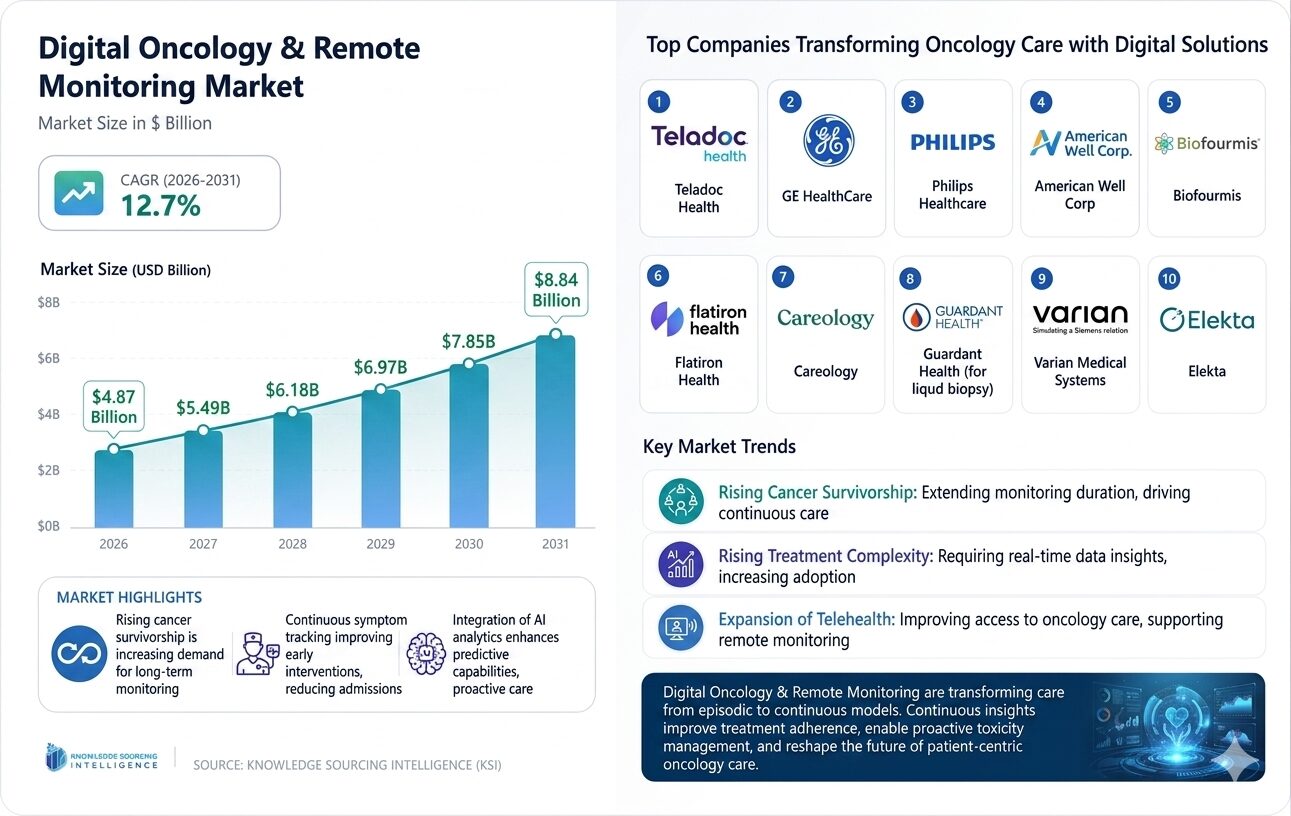
The global digital healthcare landscape is undergoing a profound shift, and oncology is at the forefront of this transformation. According to recent market insights, the Digital Oncology & Remote Monitoring market is projected to grow at a CAGR of 12.7%, rising from USD 4.87 billion in 2026 to USD 8.84 billion by 2031. This growth reflects the increasing reliance on data-driven, patient-centric technologies that enable continuous monitoring beyond traditional clinical settings.
The Rise of Digital Oncology
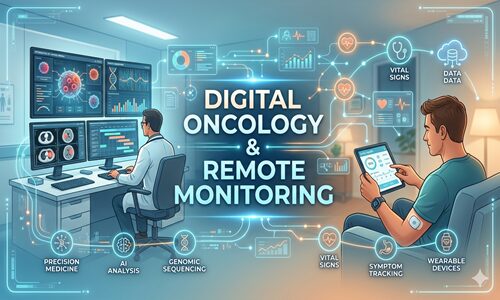
Digital oncology integrates advanced technologies such as wearable devices, mobile health apps, artificial intelligence (AI), and cloud-based platforms into cancer care. These tools allow clinicians to monitor patients remotely, track treatment responses, and detect complications early.
Remote patient monitoring (RPM) has become particularly critical in oncology due to the long-term and complex nature of cancer treatment. By enabling real-time data collection, RPM helps reduce hospital visits while improving outcomes and patient quality of life. Broader RPM markets are already expanding rapidly, driven by chronic disease prevalence and digital health adoption .
Key Growth Drivers
Several factors are fueling the expansion of the digital oncology and remote monitoring market:
1. Increasing Cancer Burden
The global rise in cancer cases is creating demand for scalable and continuous care solutions. Remote monitoring enables clinicians to manage larger patient populations efficiently.
2. Shift Toward Value-Based Care
Healthcare systems are moving away from episodic treatment models toward continuous, outcome-focused care. Digital monitoring supports early intervention and reduces costly hospital readmissions.
3. Advancements in Wearables and AI
Modern wearable devices can track vital signs, activity levels, and treatment side effects in real time. AI-driven analytics further enhance decision-making by identifying patterns and predicting complications.
4. Telehealth Integration
The convergence of telemedicine and RPM is accelerating adoption. Virtual consultations combined with continuous monitoring create a seamless care ecosystem. The broader telehealth market is also experiencing strong growth, reinforcing this trend .
Market Segmentation Insights
The digital oncology and remote monitoring market can be segmented into:
Components: Software platforms, hardware devices (wearables, sensors), and services
Applications: Chemotherapy monitoring, radiation therapy tracking, survivorship care
End-users: Hospitals, specialty clinics, homecare settings, and research institutions
Among these, home-based monitoring solutions are expected to witness the fastest growth, as healthcare systems prioritize decentralized care delivery.
Competitive Landscape
The market is characterized by a mix of established healthcare technology firms and innovative digital health startups. Key players include:
Teladoc Health, Inc.
American Well Corporation
Philips Healthcare
GE HealthCare
Biofourmis
These companies are investing heavily in AI-powered platforms, predictive analytics, and integrated care solutions to strengthen their market positions.
For instance, companies like Philips Healthcare and GE HealthCare are leveraging their expertise in medical devices to expand into connected care ecosystems, while Biofourmis focuses on advanced analytics and personalized treatment insights.
Regional Outlook
North America leads the market due to advanced healthcare infrastructure and strong adoption of digital health technologies.
Europe follows with supportive regulatory frameworks and increasing investments in telehealth.
Asia-Pacific is expected to witness the fastest growth, driven by rising cancer incidence and expanding digital healthcare access.
Challenges to Address
Despite strong growth prospects, the market faces several challenges:
Data privacy and security concerns
Integration with legacy healthcare systems
Regulatory complexities across regions
Digital literacy barriers among patients
Addressing these issues will be crucial for sustained adoption and scalability.
Future Outlook
The future of oncology lies in continuous, personalized, and data-driven care. As digital technologies mature, remote monitoring will evolve from a supportive tool to a central component of cancer management.
Innovations such as AI-driven predictive modeling, digital biomarkers, and real-time treatment optimization are expected to redefine how cancer is diagnosed, treated, and monitored.
Conclusion
The Digital Oncology & Remote Monitoring market is poised for significant growth, driven by technological advancements and the urgent need for more efficient cancer care models. With a projected value of USD 8.84 billion by 2031, the sector represents a critical intersection of healthcare and technology.
As leading companies like Teladoc Health, Inc., American Well Corporation, and Biofourmis continue to innovate, the market is set to play a transformative role in improving patient outcomes and reshaping the future of oncology care.
About the Author