The global healthcare landscape is steadily shifting toward non-invasive and patient-centric treatment approaches, and one of the most transformative innovations leading this shift is the Transdermal Drug Delivery Systems (TDDS) market. These systems, which enable drugs to be delivered through the skin, are redefining how therapies are administered—offering convenience, improved adherence, and sustained drug release.
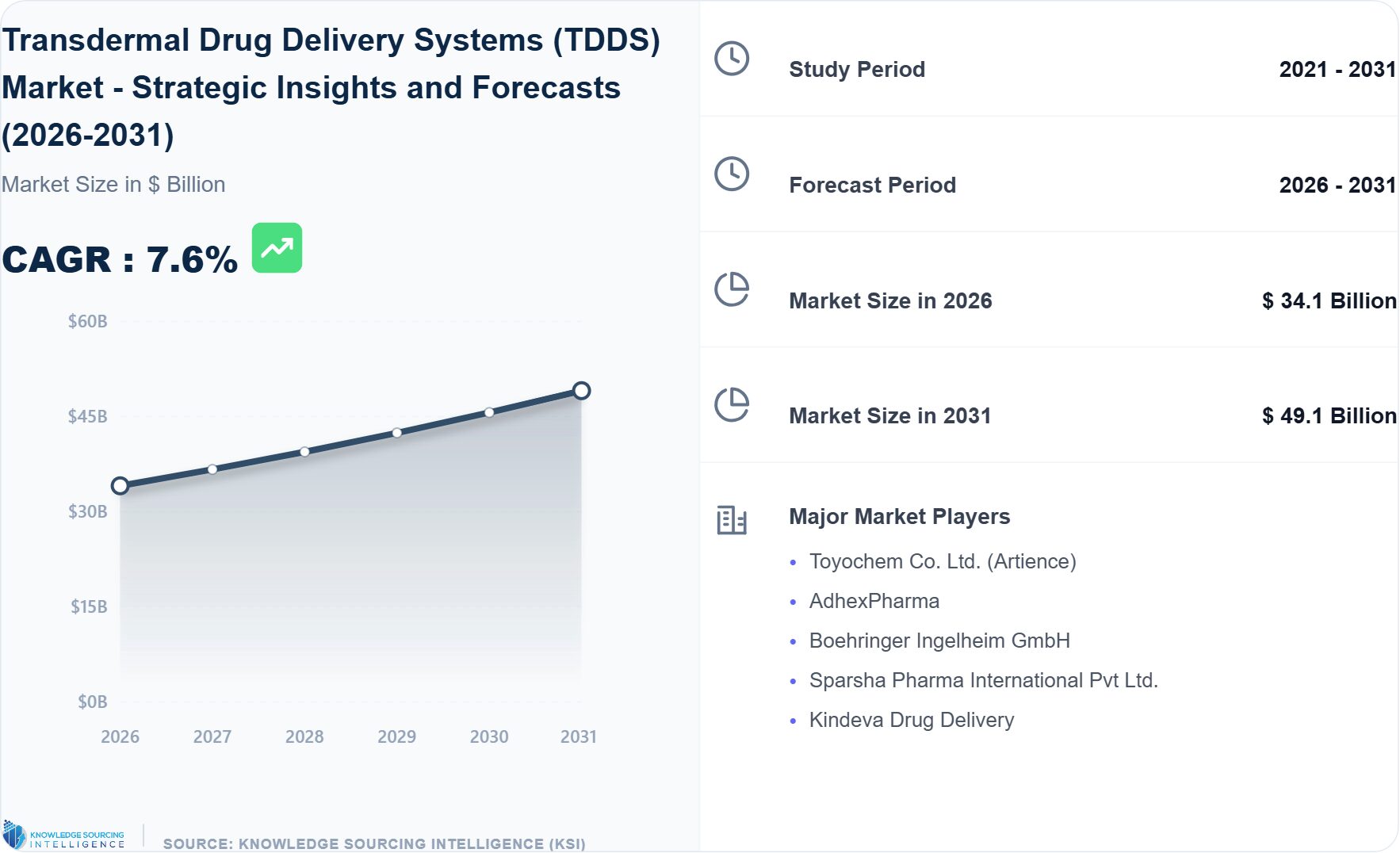
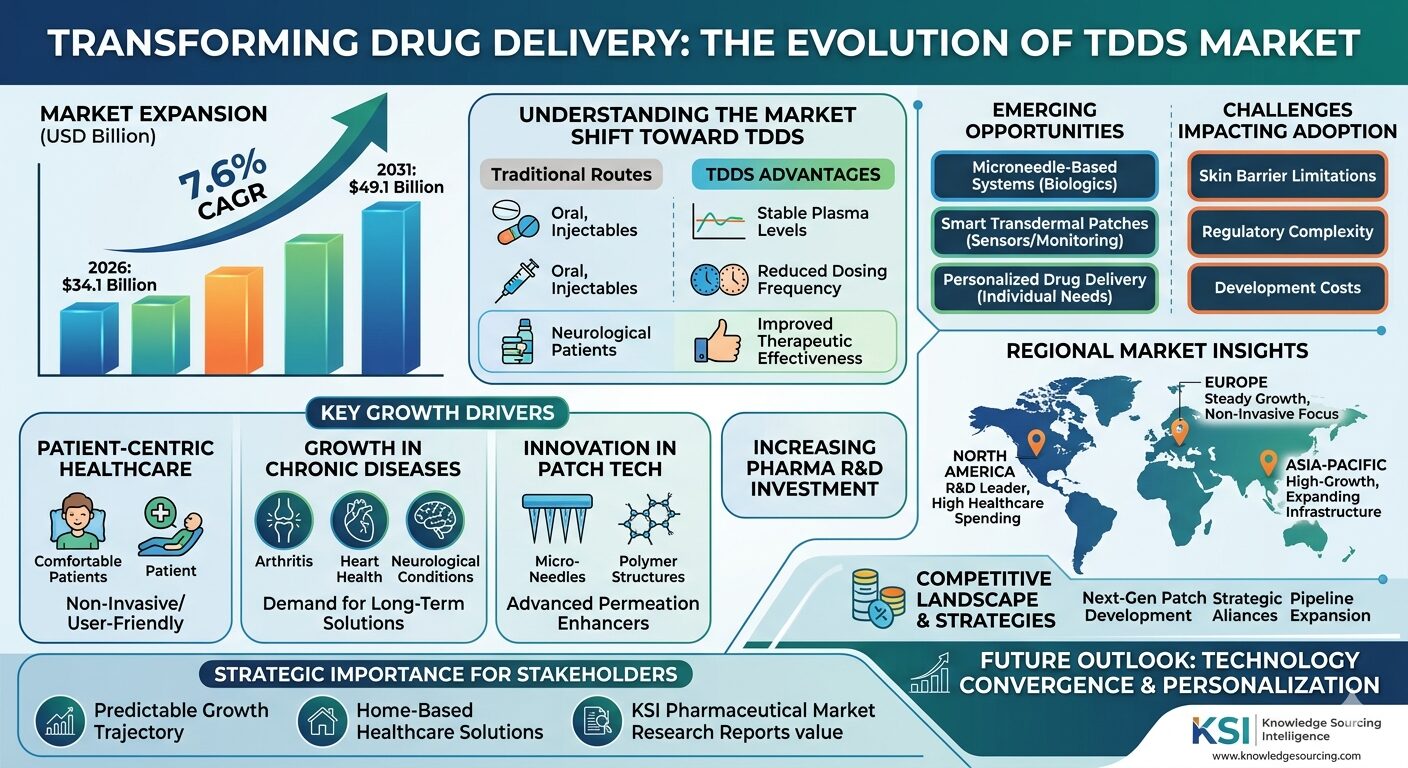
According to Knowledge Sourcing Intelligence (KSI), the Transdermal Drug Delivery Systems (TDDS) market is forecast to grow at a CAGR of 7.6%, reaching USD 49.1 billion in 2031 from USD 34.1 billion in 2026. This growth underscores the increasing importance of transdermal technologies in modern therapeutics.
What Are Transdermal Drug Delivery Systems (TDDS)?
Transdermal Drug Delivery Systems are advanced pharmaceutical technologies designed to deliver drugs across the skin into systemic circulation at a controlled rate. Unlike oral or injectable methods, TDDS bypass gastrointestinal degradation and first-pass metabolism, ensuring more consistent drug levels in the bloodstream.
Common examples include nicotine patches, hormonal patches, and pain management systems, all of which have already established strong clinical and commercial adoption globally.
Market Overview and Growth Outlook
The TDDS market is witnessing sustained growth due to its ability to address long-standing challenges in drug delivery. With increasing emphasis on home healthcare, self-administration, and long-term disease management, transdermal systems are gaining widespread acceptance.
The projected growth to USD 49.1 billion by 2031 reflects:
Expanding applications across chronic diseases
Continuous innovation in patch and delivery technologies
Rising demand for non-invasive therapies
Additionally, global estimates indicate that TDDS adoption continues to rise as healthcare systems prioritize cost efficiency and patient compliance.
Key Market Drivers
1. Rising Prevalence of Chronic Diseases
Chronic conditions such as cardiovascular diseases, neurological disorders, and chronic pain require long-term medication. TDDS offers a reliable solution by maintaining stable drug concentrations over extended periods.
2. Demand for Non-Invasive Drug Delivery
Patients increasingly prefer painless and convenient alternatives to injections. Transdermal systems eliminate needle use while improving patient comfort and compliance.
3. Improved Patient Adherence
Frequent dosing schedules often reduce adherence in oral therapies. TDDS simplifies treatment regimens through sustained-release patches, making it particularly beneficial for elderly populations.
4. Technological Advancements
Innovations such as microneedles, iontophoresis, and advanced polymer-based patches are expanding the range of drugs that can be delivered transdermally.
Emerging Trends in the TDDS Market
• Next-Generation Delivery Technologies
The transition from passive patches to active delivery systems (like microneedle arrays and energy-assisted devices) is opening new therapeutic possibilities.
• Growth of Home Healthcare
As healthcare shifts toward decentralized models, TDDS solutions align perfectly with at-home treatment protocols.
• Integration with Smart Healthcare
Future TDDS platforms are expected to integrate with digital health tools, enabling real-time monitoring and personalized dosing.
Market Challenges
Despite strong growth potential, the TDDS market faces several limitations:
Limited Drug Compatibility: Only certain molecules can effectively penetrate the skin barrier.
Regulatory Complexity: TDDS products are classified as drug-device combinations, requiring rigorous approval processes.
Skin Irritation Risks: Some patients may experience irritation or allergic reactions, impacting adoption rates.
Addressing these challenges will be critical for long-term scalability and market penetration.
Segment Insights
By Application
Pain management remains the dominant segment, supported by widespread use of transdermal patches for chronic pain relief.
By End-User
Home care settings are emerging as a major growth segment due to ease of use and reduced dependence on healthcare facilities.
Regional Insights
North America leads the market due to strong pharmaceutical innovation and favorable regulatory frameworks.
Emerging markets such as Asia-Pacific are witnessing accelerated adoption due to improving healthcare infrastructure and increasing awareness.
Competitive Landscape
The TDDS market features a mix of global pharmaceutical companies and specialized drug delivery innovators. Key players are focusing on:
Advanced patch technologies
Strategic partnerships and collaborations
Expansion into new therapeutic areas
Companies that prioritize innovation, safety, and scalability are expected to gain a competitive edge.
Why TDDS Is the Future of Drug Delivery
Transdermal drug delivery systems represent a shift toward precision, convenience, and patient-centric care. Their ability to provide controlled, sustained, and non-invasive drug administration makes them a compelling alternative to traditional delivery methods.
As highlighted by Knowledge Sourcing Intelligence (KSI), the market’s steady growth trajectory reflects both technological progress and evolving healthcare needs.
Conclusion
The Transdermal Drug Delivery Systems (TDDS) market is on a strong upward path, fueled by innovation, rising chronic disease burden, and increasing demand for non-invasive therapies. With a projected value of USD 49.1 billion by 2031, TDDS is set to become a cornerstone of modern drug delivery.
For businesses, investors, and healthcare professionals, understanding these trends is essential to capitalize on emerging opportunities in this rapidly evolving space.
About Knowledge Sourcing Intelligence (KSI)
Knowledge Sourcing Intelligence (KSI) is a leading market research and consulting firm delivering actionable insights across global industries. The company specializes in providing in-depth market intelligence, industry analysis, and strategic recommendations that enable businesses to identify emerging opportunities and navigate complex market landscapes.
With a strong focus on accuracy, reliability, and forward-looking analysis, Knowledge Sourcing Intelligence helps organizations make informed decisions, optimize growth strategies, and stay competitive in an evolving global market.
About the Author