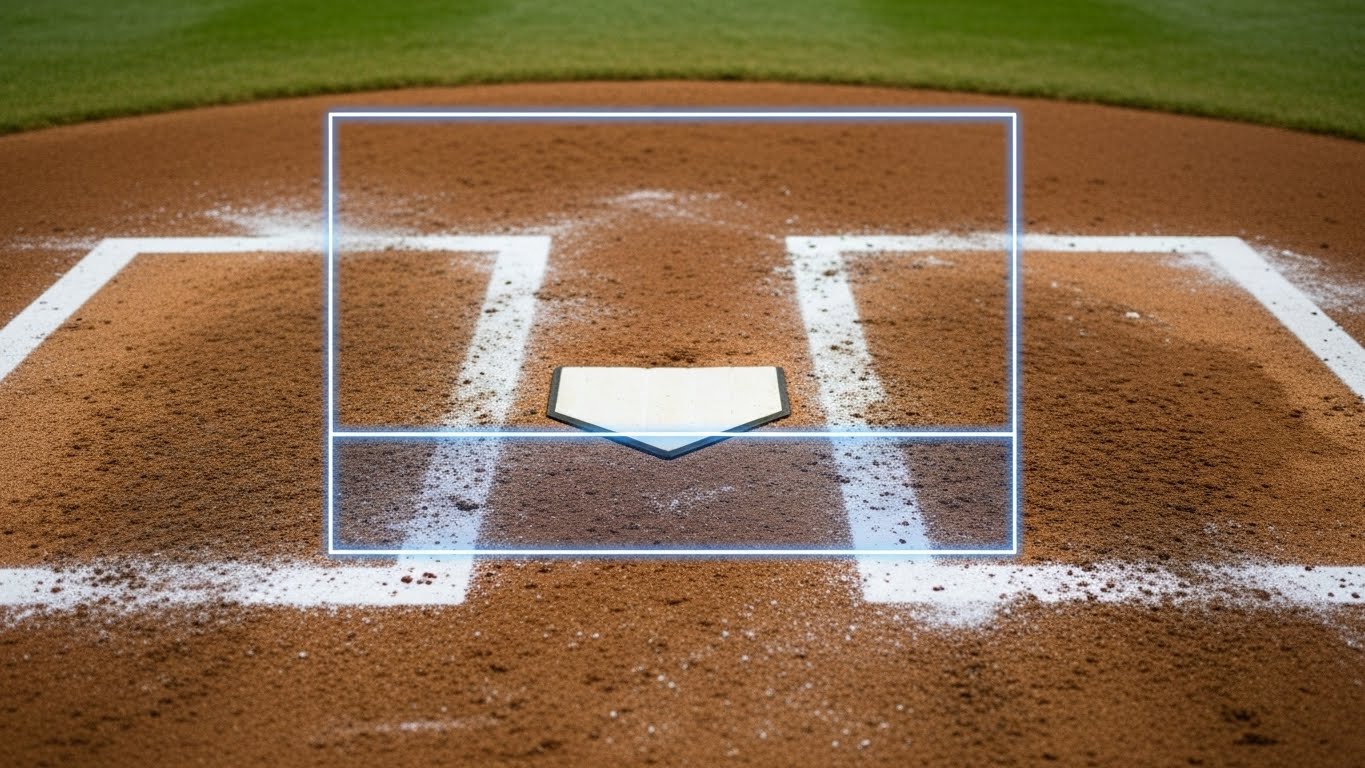
Precision separates good coaching from great coaching. When baseball coaches implement training programs with a regulation strike zone home plate, they establish a foundation for consistent, actionable feedback that accelerates player development. This standardized approach transforms how pitchers, catchers, and umpires understand the most critical area in baseball: the zone where strikes are called.
The challenge facing many youth and amateur baseball programs centers on inconsistency. Without proper visual references during practice, players develop muscle memory based on approximations rather than the precise 17-inch width and official vertical dimensions that define competitive play. This disconnect creates confusion when athletes transition to games where regulation equipment determines success or failure on every pitch.
Understanding the Regulation Strike Zone Specifications
MLB regulations establish clear parameters for the strike zone. The horizontal dimension measures exactly 17 inches, matching the width of a regulation home plate. Vertically, the zone extends from the hollow beneath the kneecap to the midpoint between the top of the shoulders and the top of the uniform pants. This standardized definition, implemented in its current form since 1996, provides the framework that all levels of baseball should reference during training.
A regulation strike zone home plate serves as the physical anchor for this three-dimensional space. When coaches incorporate authentic equipment into practice sessions, they eliminate the guesswork that plagues training environments using makeshift or non-regulation gear. Research on umpire accuracy demonstrates that even professional officials struggle with consistency, particularly at the upper and lower boundaries of the zone. If MLB umpires face these challenges, developing players require every advantage that proper training equipment can provide.
The standard baseball measures approximately 2.94 inches in diameter, meaning the effective strike zone width becomes roughly 23 inches when accounting for any part of the ball touching any part of the zone. This mathematical precision underscores why training with accurate equipment matters. A pitcher throwing to a non-regulation plate develops targeting habits that won’t translate to competitive situations.
How Accurate Equipment Enhances Coaching Communication
Feedback quality depends on shared understanding between coaches and players. When a coach instructs a pitcher to “work the outside corner,” that directive means nothing without a precise reference point. A properly marked strike zone home plate creates visual anchors that make abstract concepts concrete.
Studies on skill acquisition in sports consistently show that immediate, specific feedback produces faster learning than general corrections. Technology companies like Rapsodo and Zone Evaluation systems have invested millions in creating tools that track pitch location relative to the strike zone. However, these sophisticated systems still reference the same fundamental element: a regulation home plate serving as the baseline for measurement.
During bullpen sessions, catchers set up based on the plate’s dimensions. Without a regulation baseball strike zone over home plate, their positioning becomes arbitrary. This inconsistency cascades through the entire feedback loop. The pitcher receives mixed signals about location, the catcher develops imprecise receiving techniques, and the coach lacks objective criteria for evaluation.
Youth baseball programs particularly benefit from this standardization. Players aged 12 and under are still developing their understanding of the strike zone’s boundaries. When practice equipment matches game equipment, young athletes build accurate mental models from their earliest training experiences. The alternative—practicing with approximate dimensions and then adjusting during games—introduces unnecessary cognitive load that hampers performance.
The Connection Between Visual Learning and Pitching Mechanics
Approximately 65% of the population are visual learners, according to educational research. For these athletes, seeing the precise strike zone dimensions creates stronger neural pathways than verbal instruction alone. A strike zone home plate marked with the outer edges and depth provides constant visual feedback during every pitch, reinforcing proper targeting without requiring coach intervention.
This visual reinforcement proves especially valuable for developing breaking balls and off-speed pitches. When a pitcher practices a curveball that starts above the zone and drops into the strike zone, they need precise markers to calibrate the trajectory. Without regulation equipment providing accurate feedback, pitchers may develop mechanics that work in practice but fail under game conditions where official dimensions apply.
Professional pitching coaches emphasize location drills where pitchers must hit specific zones repeatedly. These drills lose effectiveness when the target zones don’t match regulation specifications. A baseball strike zone over home plate with marked quadrants or numbered sections allows coaches to call out specific targets, and pitchers can immediately verify their accuracy against consistent standards.
Building Consistency Across Practice Environments
Baseball programs often utilize multiple practice facilities—indoor cages, outdoor bullpens, practice fields, and game fields. When each environment features a regulation baseball strike zone over home plate, players experience consistency regardless of location. This standardization eliminates the adjustment period that occurs when players encounter different equipment configurations.
The psychological impact of training consistency extends beyond mechanics. Athletes develop confidence when they can trust their practice performance translates directly to game situations. Research in sports psychology demonstrates that confidence correlates strongly with competitive performance. Players who question whether their practice success will transfer to games experience anxiety that undermines execution.
Coaches also benefit from consistent equipment across environments. When evaluating progress over time, they can compare performance data meaningfully only when the measurement standards remain constant. A pitcher who improves their first-pitch strike percentage in a practice facility with non-regulation equipment might not actually be improving relative to game standards.
Impact on Catcher Development and Framing Skills
Modern baseball increasingly recognizes the importance of pitch framing—the catcher’s ability to receive pitches in ways that influence umpire strike calls. Analytics companies have quantified the value of elite framing, with top catchers adding 20-30 runs per season through superior receiving techniques. These skills develop through thousands of repetitions, but only when catchers train with regulation strike zone home plates.
Framing effectiveness depends on understanding the precise boundaries where borderline pitches become strikes. A catcher practicing with approximate equipment develops receiving techniques calibrated to incorrect dimensions. When they transition to games, their framing attempts may actually move borderline pitches further from the strike zone rather than closer to it, reducing their value to the pitching staff.
Coaching feedback on framing requires specificity. Instructing a catcher to “steal strikes on the outside corner” becomes actionable only when both coach and player reference the same 17-inch width. Video analysis tools that track pitch location lose utility when the reference plate in practice footage doesn’t match regulation specifications.
The Role of Umpire Training and Consistency
Youth baseball programs often struggle with umpire quality and consistency. Many amateur umpires receive minimal training and lack confidence in their ball-strike decisions. When practice facilities use regulation strike zone home plates, coaches can better prepare their teams for the variability they’ll encounter.
Pitchers who train with regulation equipment develop an understanding of the zone that allows them to adjust to different umpire interpretations. Rather than needing to discover each umpire’s particular zone during a game, they can make smaller calibrations from a known baseline. This adaptability provides significant competitive advantages, particularly in tournaments where teams face new umpires each game.
For programs that train their own umpires, regulation equipment becomes essential. Umpire development requires thousands of pitches to build the pattern recognition that enables accurate ball-strike decisions. Training with non-regulation equipment wastes these repetitions, as the umpires are learning to call a zone that doesn’t exist in competitive play.
Measuring Practice Improvement with Objective Standards
Performance analytics drive modern sports training. Baseball coaches track metrics like first-pitch strike percentage, zone contact rate, and strike-to-ball ratios to evaluate pitcher development. These metrics become meaningful only when measured against consistent standards. A baseball strike zone over home plate provides the objective reference that makes these measurements valid.
Technology integration amplifies this benefit. Many programs now use video analysis software that can overlay strike zones on practice footage. The accuracy of these overlays depends entirely on whether the physical home plate in the video matches regulation specifications. Without regulation equipment, the data becomes unreliable, undermining the investment in analytical tools.
Feedback cycles accelerate when players can independently verify their performance. After a bullpen session, a pitcher reviewing video with zone overlays can self-assess their location without waiting for coach input. This immediate feedback loop speeds skill acquisition, but only when the video analysis references accurate dimensions.
Creating Training Progressions That Transfer to Competition
Elite coaching involves building training progressions that systematically prepare athletes for competitive demands. When practice equipment matches game equipment, coaches can design progressions with confidence that each step builds toward game-ready performance. A baseball strike zone over home plate serves as the constant in this progression, ensuring that location work translates from basic drills to simulated game situations.
Many programs implement competitive drills where pitchers face simulated game pressure. These drills maximize their developmental impact when every element matches game conditions. Using non-regulation equipment during these high-pressure simulations undermines their purpose, as athletes are practicing to compete in conditions that don’t exist.
The transfer of learning from practice to games represents the ultimate measure of training effectiveness. Sports science research consistently shows that training specificity predicts transfer. The more closely practice conditions match competitive conditions, the more reliably skills transfer. While many factors influence this transfer, equipment standardization provides a foundation that supports all other training elements.
Conclusion
Investment in proper training equipment reflects a commitment to player development excellence. When coaches implement regulation strike zone home plates across their practice environments, they establish the foundation for precise feedback, consistent skill development, and confident competition. The relatively modest cost of quality equipment delivers returns through accelerated learning, reduced confusion, and better preparation for game situations.
Baseball’s competitive landscape continues to intensify at all levels. Programs that prioritize training consistency and feedback accuracy position their athletes for success. A baseball strike zone over home plate represents more than a piece of equipment—it embodies the standard that separates approximate from precise, and good coaching from great coaching. As technology and analytics reshape baseball training, the fundamentals remain unchanged: accurate practice produces accurate performance, and precision starts with regulation equipment.
Coaches who recognize this connection invest in the tools that support their athletes’ development. The feedback loop between pitcher, catcher, and coach strengthens when everyone references the same objective standards. Young players develop proper habits from the beginning, advanced players refine their skills with confidence, and entire programs build cultures of precision that manifest in competitive results. The strike zone home plate stands at the center of this ecosystem, providing the visual and physical reference that makes excellent coaching possible.
About the Author