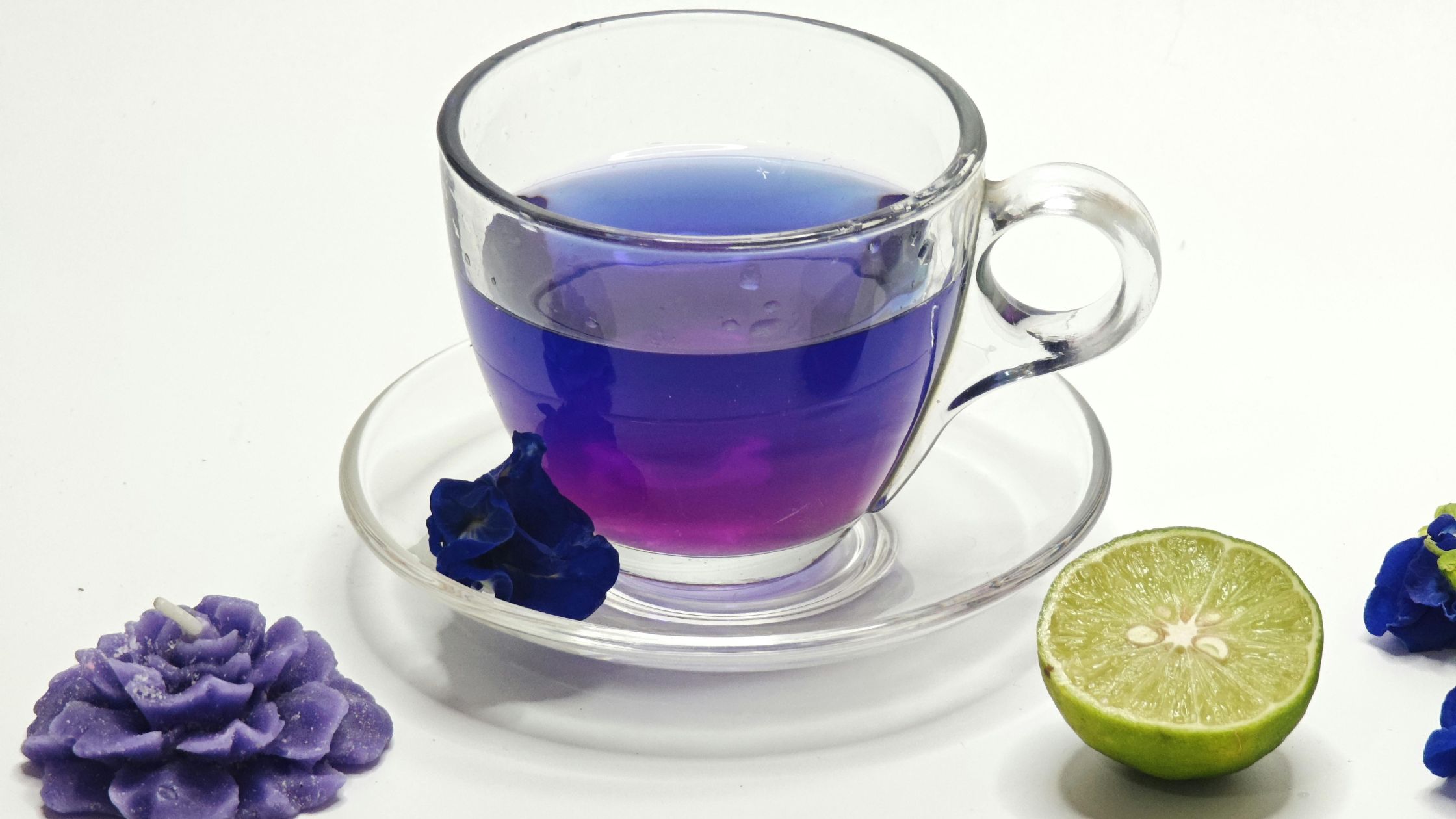
Aparajita tea is a simple herbal drink that many people use to support everyday health in a soft, non‑aggressive way. It is easy to prepare, light on the stomach and naturally free from caffeine, which makes it suitable at different times of the day. Rather than promising dramatic results, aparajita tea offers quiet support for hydration, mood and lighter lifestyle choices.
What Is Aparajita Tea?
Aparajita tea is made by steeping the dried blue petals of the aparajita plant in hot water until the liquid turns a rich blue. These petals, often called aparajita flower, give the drink its colour and mild, earthy taste. The flavour is gentle enough to enjoy plain, or it can be brightened with a squeeze of lemon or a little honey.
In many recipes and wellness products, the same blossom is known as butterfly pea flower. Because the tea is usually made with only water and petals, it stays very low in calories and does not contain natural caffeine. This clean base is one reason aparajita tea fits well into health‑focused routines.
Gentle Support for Hydration and Weight Balance
Good hydration plays a key role in how energetic the body feels, and aparajita tea helps here in a calm way. Its light taste and attractive blue colour make it easier for many people to drink more fluid across the day than they would with plain water. Regular, moderate intake supports digestion, circulation and overall comfort without adding sugar or gas.
When taken without sweeteners, each cup contributes almost no calories. This makes aparajita tea a useful replacement for sugary soft drinks, packaged juices or very sweet chai. Over time, these small swaps can support steady weight balance without harsh dieting, which is why many people include this drink as part of a more mindful lifestyle.
Calm Energy and Evening Relaxation
Because aparajita tea does not contain caffeine, it offers warmth and comfort without the sharp energy spike that comes from strong tea or coffee. A cup during a mid‑day break can refresh the mind without leaving you restless or interfering with focus later on. The act of boiling water, adding petals and watching the colour deepen gives a brief pause from constant activity.
In the evening, this same quality makes aparajita tea a good choice for winding down. A warm cup after dinner can become a gentle signal that the workday is over and it is time to slow the pace. Many people appreciate that they can sip it close to bedtime without worrying about sleep being disturbed.
Subtle Benefits for Skin and Mood
Hydration and lighter drink choices often show up on the skin. When aparajita tea replaces heavy, sugary beverages, the body carries less extra sugar and feels less weighed down. Over time, this can support a fresher look and a more comfortable feeling in the skin, especially when combined with a balanced diet and enough rest.
The bright blue colour that comes from butterfly pea flower also has a small mood effect. A colourful cup on a desk or side table acts as a quiet reminder to pause, breathe and take a moment for yourself. This regular, gentle self‑care can reduce the feeling of being constantly rushed or stressed.
From Aparajita Plant to Daily Habit
The aparajita plant itself is a soft green climber often seen on fences and balcony grills in warm climates. Its blossoms are harvested as aparajita flower, dried in the shade and stored for later use. A small jar of these petals at home makes it easy to prepare aparajita tea whenever you want a light, supportive drink.
For most healthy adults, one or two cups a day is a comfortable amount. There is no need to drink very strong brews or large quantities. People who are pregnant, breastfeeding or living with long‑term health conditions should speak with a healthcare professional before using any herbal tea daily. Used with this kind of care, aparajita tea offers gentle health support that fits neatly into normal life without demanding dramatic changes.
About the Author