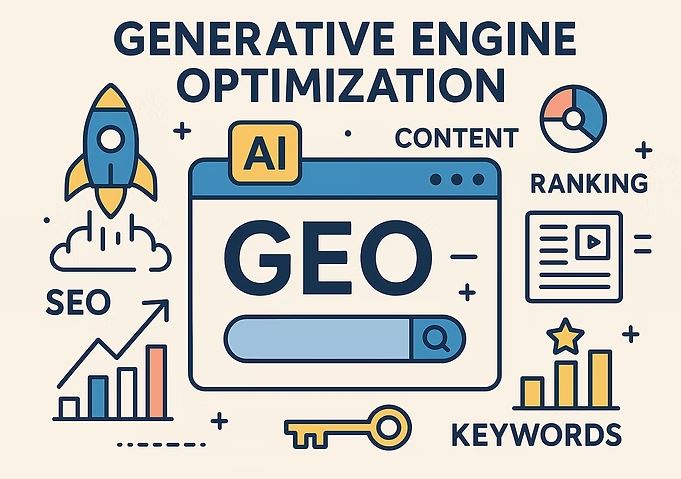
Search is changing faster than ever. For years, websites focused on ranking higher in search engines like Google by optimizing pages for specific keywords and backlinks. But artificial intelligence is changing how people find and consume information online. The rise of tools like ChatGPT, Google’s Gemini, and Perplexity has created a new kind of search experience driven by AI-generated answers instead of traditional search results. This shift has introduced a new concept: generative engine optimization.
Generative Engine Optimization, or GEO, focuses on helping content appear in AI-generated responses. It is no longer about optimizing for search engines. It is about optimizing for a generative engine that learns, understands, and produces new content from existing online data.
How Generative Engines Work
To understand GEO, it helps to look at how generative search engines work. Traditional search engines scan billions of web pages, index them, and show results ranked by relevance. Generative engines, on the other hand, don’t just point to sources. They read, analyze, and summarize multiple sources to produce a single, synthesized answer. These engines use large language models (LLMs) to predict the most relevant response based on user intent, tone, and context.
For example, when someone asks an AI engine, “What are the best marketing strategies for startups?” the answer is not pulled directly from one website. The engine creates a new response by blending information from many sources. If your website’s content is clear, structured, and informative, it is more likely to be included in those AI-generated answers. That is the goal of generative engine optimization companies: to help online content stay visible and influential even when users never see a traditional search results page.
How GEO Differs from Traditional SEO
Unlike SEO, which relies on ranking algorithms and keyword density, GEO focuses on data clarity and credibility. It rewards pages that explain concepts clearly, use trustworthy sources, and provide structured information that machines can easily interpret.
Metadata, schema markup, and concise writing all become essential for visibility. In short, GEO is about teaching machines how to read your content the way humans do.
Key Principles Of Generative Engine Optimization
Here are a few of the principles driving effective generative engine optimization:
- Clarity over complexity
AI systems favor content written in simple, direct language. Complicated phrasing or long sentences can confuse algorithms. Clear explanations, consistent formatting, and precise definitions increase the chances of being referenced by AI systems.
- Structured data
Schema markup, headings, and bullet points help engines identify relationships between ideas. When content is neatly structured, generative models can better understand it and incorporate it into synthesized outputs.
- Authoritative sourcing
Engines prefer trustworthy and well-sourced material. Linking to research, statistics, and credible organizations signals reliability to AI systems, just as backlinks do for traditional search engines.
- Comprehensive coverage
Content that provides balanced, well-rounded insights often ranks higher in AI-generated summaries. Covering multiple perspectives helps AI engines form more accurate and complete answers.
- Semantic richness
Generative systems analyze context, not just keywords. Using related terms, synonyms, and contextual examples strengthens understanding and makes content more adaptable to AI interpretation.
How GEO Measures Success
Another important distinction is how GEO measures success. Traditional SEO tracks impressions, clicks, and rankings. GEO looks at content influence: how often an engine cites, summarizes, or reproduces your information in its generated responses. This requires new forms of analytics that can detect AI references and content overlap.
What GEO Means For Content Creators And Marketers
For content creators and marketers, this shift means focusing less on chasing keywords and more on creating meaning. Articles that clearly define terms, outline processes, and explain concepts in logical order will be more valuable in generative search. It also means writing for both human readers and machine interpreters simultaneously.
Conclusion
Generative engine optimization is still an emerging field. Best practices are evolving as AI systems become more complex. However, one thing is clear: the fundamentals of good content, accuracy, clarity, and depth, remain the same. GEO simply builds on these foundations to meet the needs of AI-driven discovery.
In the coming years, generative engine optimization companies will continue to study how AI engines select and use information. As generative tools reshape how people access knowledge, GEO will define what visibility means in a world led by machine understanding rather than simple search rankings. It is not just the next phase of SEO. It is the new standard for being seen, understood, and trusted in the age of generative search.
About the Author